
A locked office door can stop far more than one person’s day. It can delay payroll, block access to customer files, leave a team waiting in the hall, or keep you from opening on time. When you need office lockout help Saint Paul businesses can rely on, the priority is simple: get the right person back inside without turning a lockout into damaged hardware, a security issue, or a larger bill.
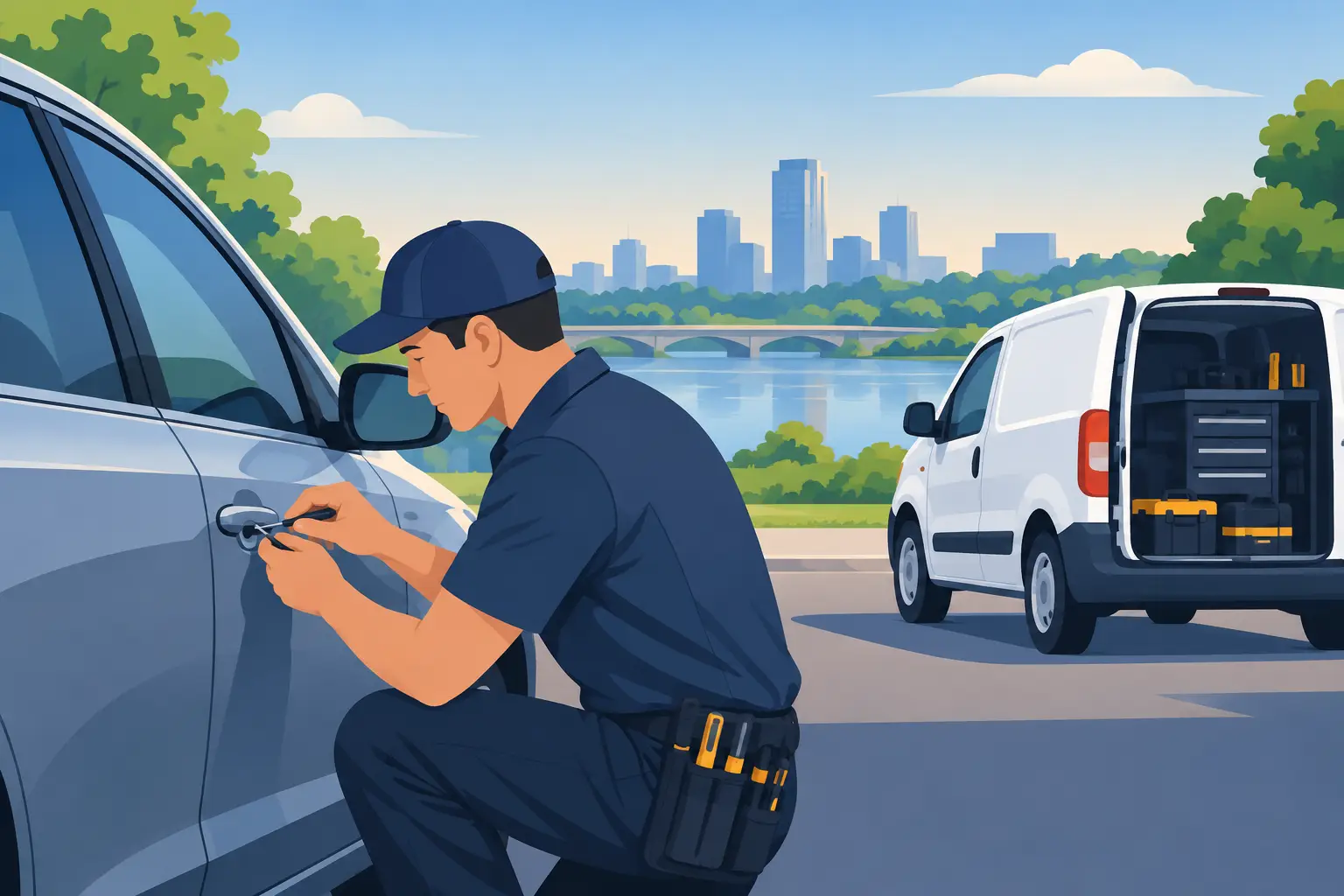
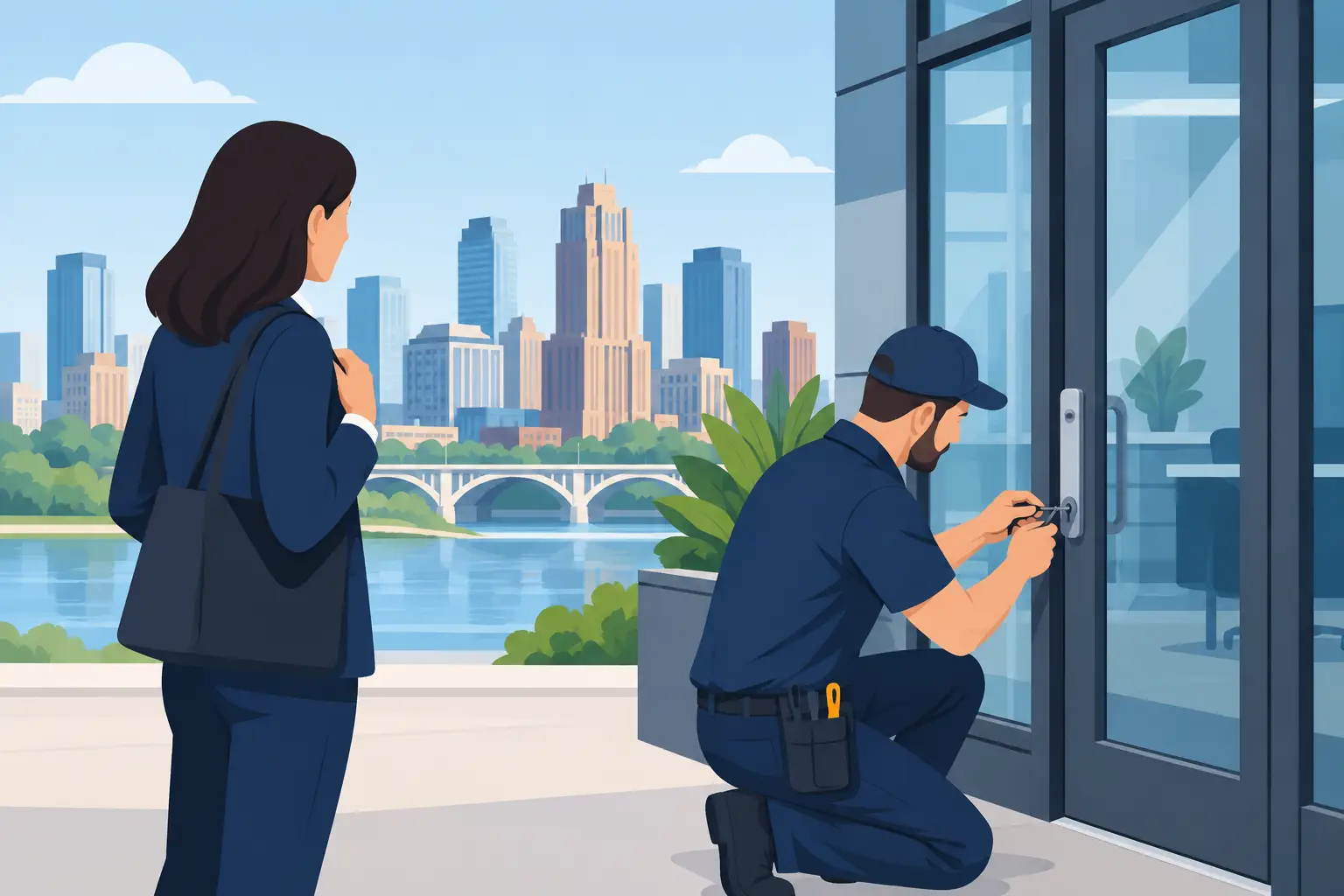
A mobile commercial locksmith can come to your Saint Paul workplace, assess the door and lock, and work to restore access on-site. Free Eagle Locksmith provides 24/7 emergency locksmith service across the Twin Cities, with technicians prepared for common office locks, keys, commercial door hardware, and access problems.
What to Do During an Office Lockout
The first few minutes matter. A rushed employee may be tempted to force a door, pry a latch, remove a lock cylinder, or ask someone to climb through another entrance. Those moves can damage the door frame, compromise a fire-rated door, trigger an alarm, or create questions about who was authorized to enter.
Start by confirming that the lockout is really limited to the door in front of you. Check whether an approved manager, building representative, or facilities contact has access to another authorized entrance. If your office is in a multi-tenant building, the property manager may be able to confirm building-entry procedures. That does not always solve the problem, especially when an interior suite, records room, server room, or private office is secured separately, but it is worth checking.
Then identify the type of access problem. Is a key missing? Did a key break in the lock? Is an electronic keypad unresponsive? Did a deadbolt turn but fail to open? Is the door simply shut with the keys on the other side? Clear details help a locksmith arrive prepared and help your team avoid unnecessary delays.
If people are trapped inside, there is a medical emergency, or a fire safety concern, call emergency services first. For a standard access problem, contact a qualified commercial locksmith immediately rather than experimenting with the lock.
Why Office Lockouts Need a Commercial Approach
Office doors are not all alike. A small professional office may use a basic lever lock, while a medical practice, warehouse, law firm, or property management office may have restricted keyways, panic hardware, magnetic locks, keypads, or layered access controls. The right solution depends on the door, the hardware, and the level of security your business needs after entry is restored.
A commercial locksmith’s goal is usually to gain entry with the least disruption possible. In many cases, that means opening the lock without replacing it. But non-destructive entry is not always possible. A failed lock, a broken key, damaged hardware, or a compromised cylinder may require repair or replacement. A good technician should explain what they found and what work is actually needed before moving forward.
There is also an authorization issue. At a workplace, the person calling may not be the business owner. A responsible locksmith may ask for identification, proof of tenancy, or confirmation from an authorized contact before opening a secured commercial space. That small delay protects your company from unauthorized access and helps preserve the integrity of your security procedures.
Common Reasons Saint Paul Offices Get Locked Out
Lost keys are the obvious cause, but they are far from the only one. Employees can leave keys at home, take the wrong ring, or accidentally lock them in a private office. A former employee may have failed to return a key. Keys can wear down over time until they no longer operate the cylinder reliably.
Mechanical failures are also common. A latch can bind because the door has shifted with weather changes or building movement. A commercial lever may feel loose, a deadbolt may jam, or a key may snap under pressure. In older Saint Paul buildings, worn locks and misaligned doors can create repeat lockouts if the underlying issue is not repaired.
Electronic access systems bring different challenges. A keypad may have a dead battery, a credential may be deactivated, a code may have been changed, or a power issue may affect a controlled door. Electronic hardware can improve accountability and convenience, but it needs maintenance and a clear backup plan for managers and employees.
When Getting Back In Is Only the First Step
Once the door opens, take a moment to decide whether the lockout revealed a larger security gap. If the missing key was tied to an employee who no longer works with your company, rekeying may be the smarter choice. Rekeying changes the internal configuration of an existing compatible lock so old keys no longer work. It is often more cost-effective than replacing every lock, provided the hardware is in good condition.
Replacement may make more sense when the lock is worn, damaged, outdated, or unable to meet your current security needs. High-security locks, restricted key systems, and upgraded commercial hardware can reduce the risk of unauthorized duplication and improve control over who has access.
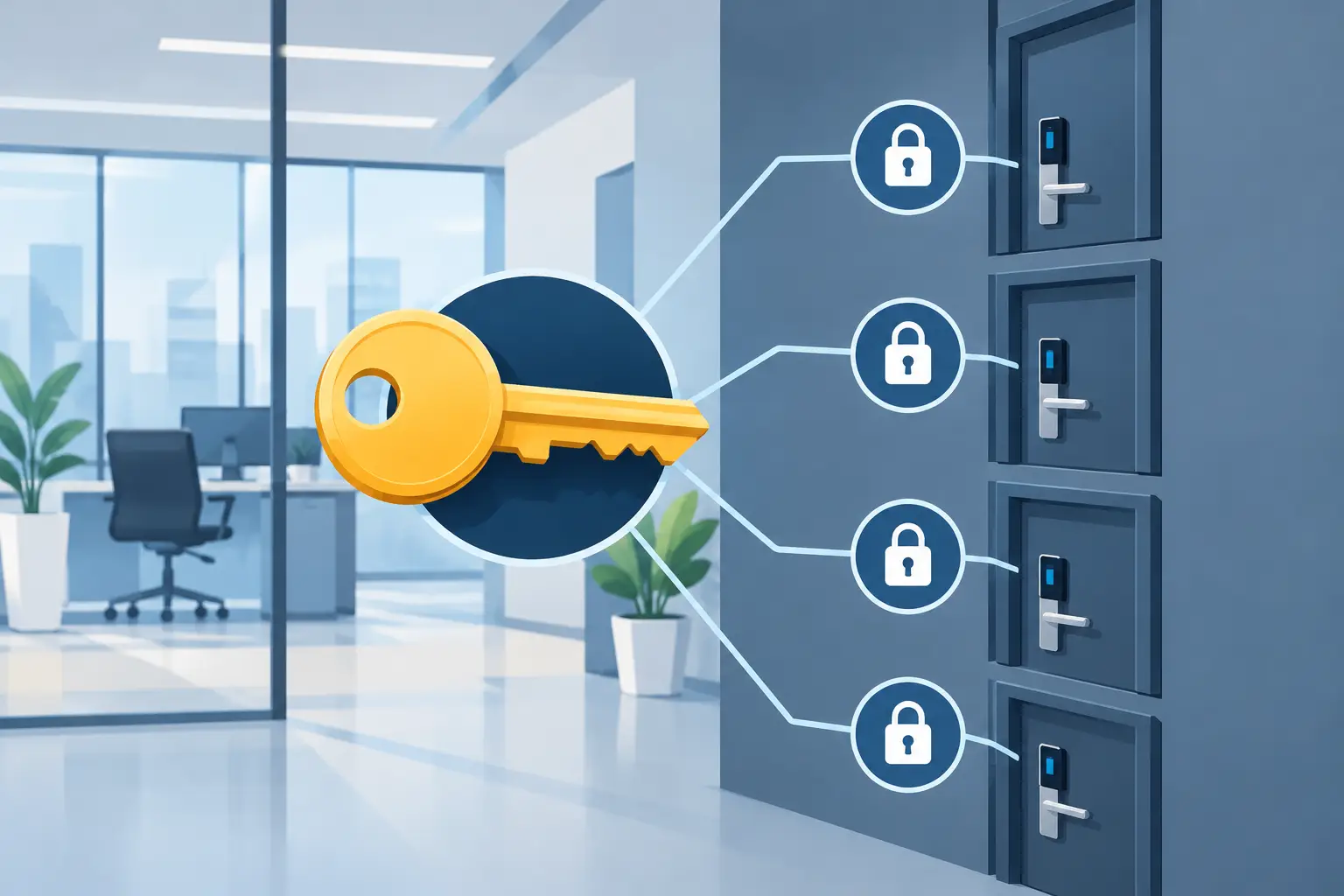
For businesses with several doors and multiple team members, a master-key system can simplify daily operations. The trade-off is that key control becomes even more important. A master key is convenient, but it must be carefully assigned, tracked, and recovered when roles change. Some offices are better served by separate keys for sensitive spaces, while others need a well-planned hierarchy that lets managers access multiple areas without giving every employee the same level of entry.
Questions to Ask Before Approving Lock Work
During an emergency, you do not need a long consultation, but a few direct questions can help you make a sound decision. Ask whether the technician can open the door without replacing the lock, whether the lock is still reliable after entry, and whether rekeying is available if a key is missing.
If replacement is recommended, ask why. The answer should be practical: the lock is damaged, the keyway is compromised, the hardware is failing, or the existing setup no longer provides the level of access control your office requires. You should also understand who will receive keys, how many keys will be made, and whether future duplicates can be controlled.
Prevent the Next Lockout Without Slowing Down Your Team
No office can eliminate every lost key or hardware failure, but a few policies can reduce disruptions. Keep an up-to-date list of people authorized to approve locksmith work. Store a backup key only in a secure, controlled location, not under a mat, in an unlocked desk, or taped near the door. When an employee leaves, recover physical keys and promptly remove or change digital credentials.
It also helps to address small warning signs before they become an after-hours emergency. A stiff key, sagging door, loose lever, or latch that requires repeated force deserves attention. Employees should never have to shoulder a door closed or twist a key hard enough to worry it will break. Routine lock repair costs less than a disruption that keeps staff, customers, or vendors outside.
For offices with frequent staff turnover or valuable files, equipment, or inventory, consider a planned security review. The best setup is not always the most expensive one. A small office may need dependable commercial-grade locks and disciplined key management. A larger operation may benefit from master-key planning, high-security cylinders, or electronic access at selected doors. The right answer depends on your workflow, building layout, budget, and risk level.
Fast Office Lockout Help in Saint Paul
An office lockout rarely happens at a convenient time. It may be early before a shift, late after a meeting, during a weekend project, or right when customers are arriving. A 24/7 mobile locksmith brings the service to your location, rather than asking your business to wait for a storefront appointment. Free Eagle Locksmith aims for a 15-30 minute response window when conditions allow, helping Saint Paul businesses restore access quickly and make informed decisions about damaged or missing keys.
When you call, be ready to share your Saint Paul location, the type of door involved, the nature of the problem, and your relationship to the business. That information helps dispatch the right technician and keeps the visit focused on a safe, efficient solution.
A locked office door is stressful, but it does not have to derail the day. Keep the door intact, verify authorization, and call for professional help early. Once you are back inside, use the moment to make one practical improvement – whether that is recovering old keys, repairing worn hardware, or giving the right manager a secure backup access plan.