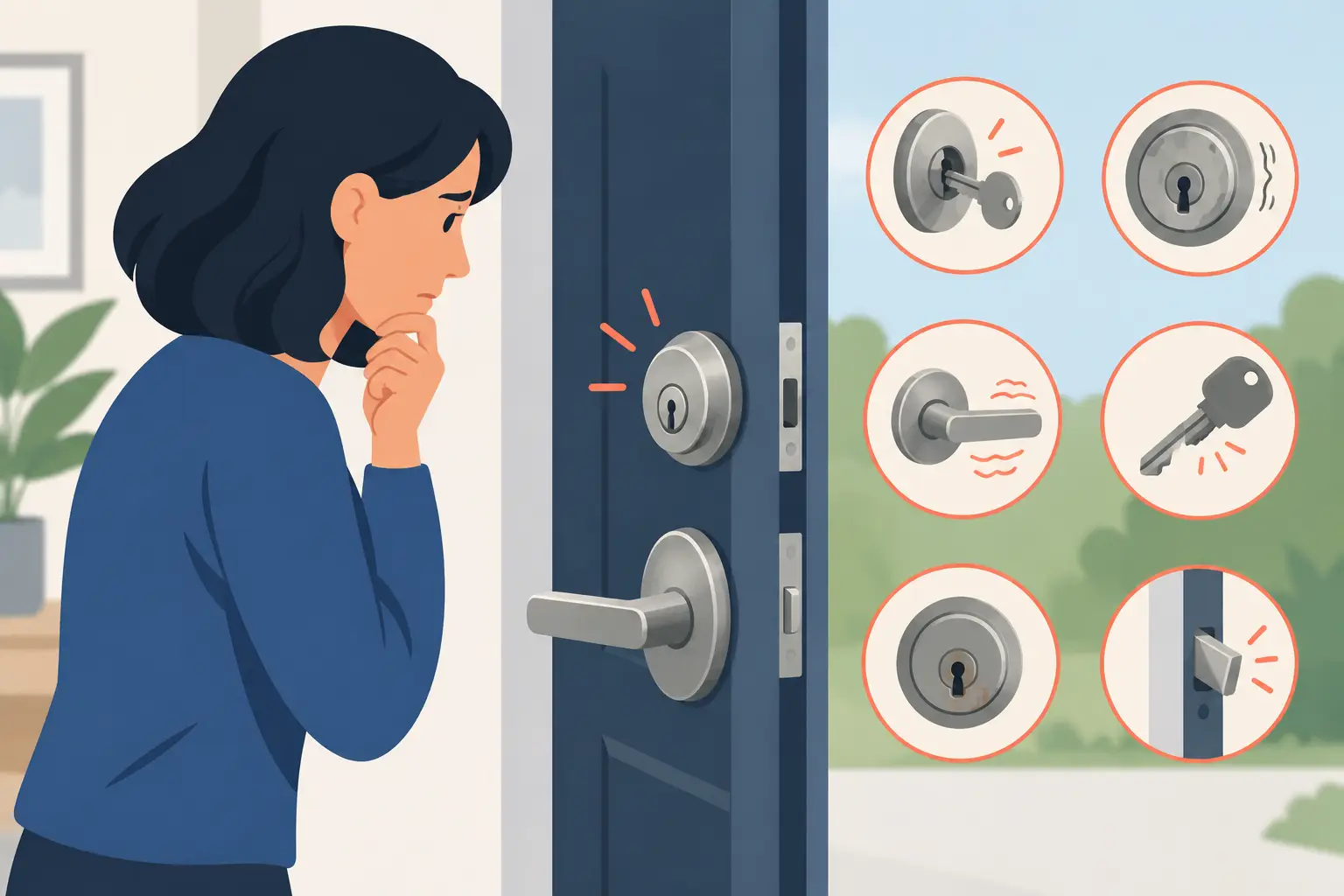

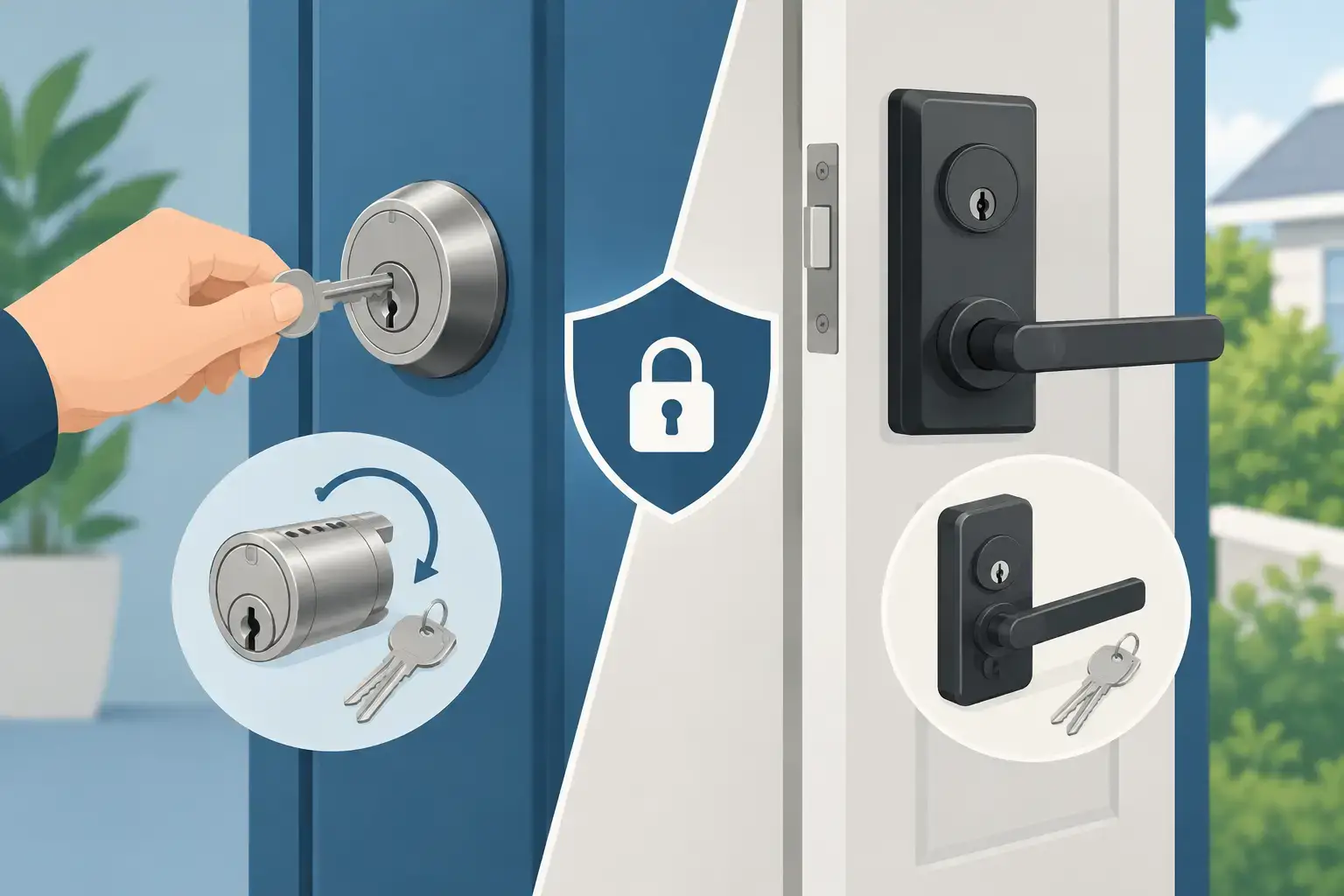
A key goes missing. A tenant moves out. Your front-door lock sticks after another Minnesota winter. In each situation, the question is usually the same: rekeying versus replacement – which one actually protects your property without spending more than necessary?
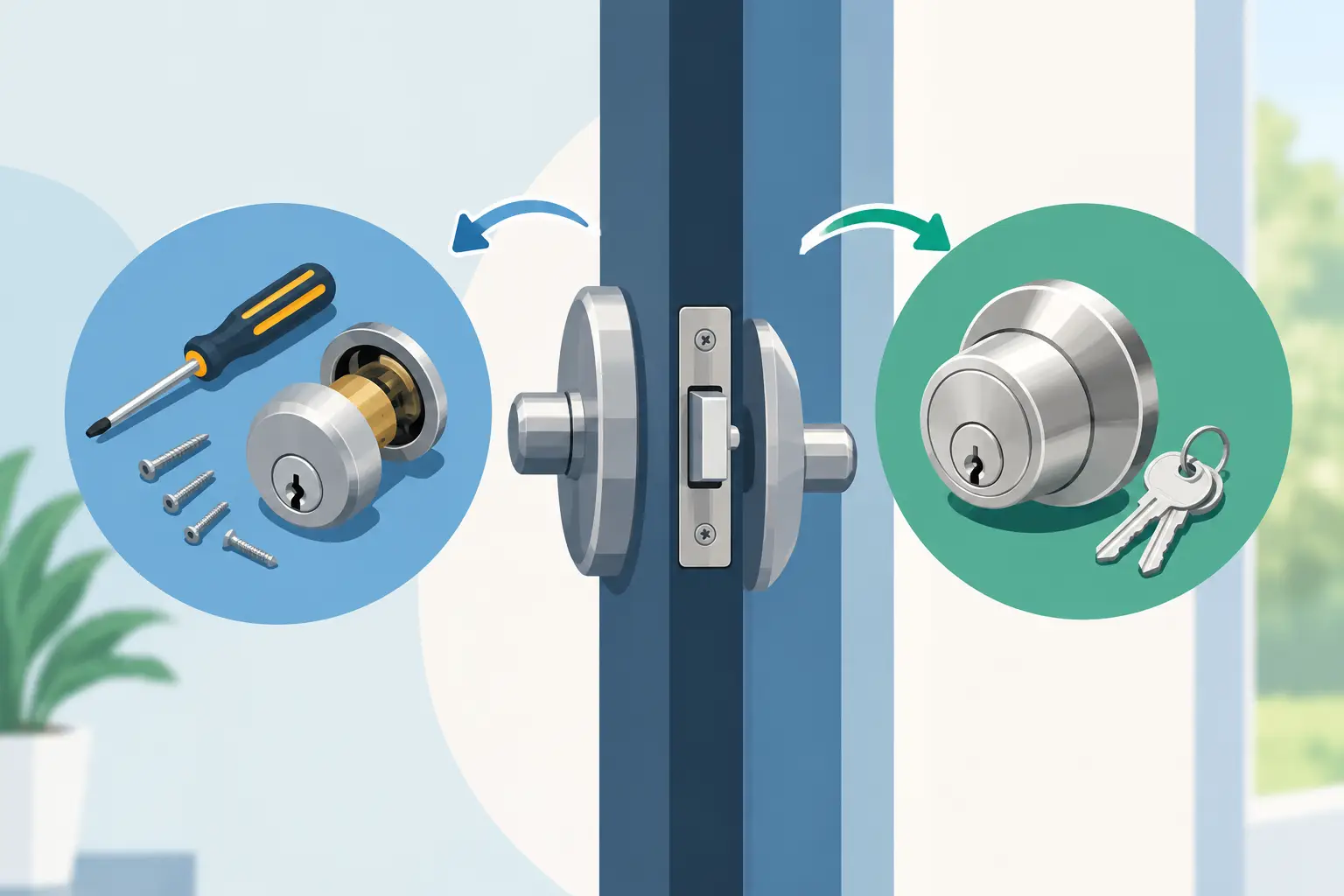
The right answer depends on the condition of the lock, who may still have a key, and whether the hardware gives you the security you need. Rekeying is often the faster, more affordable fix when the lock itself is sound. Replacement is the better move when the lock is damaged, outdated, or no longer strong enough for the door it protects.
What Rekeying Actually Changes
Rekeying changes the inside of an existing lock so the old key no longer works. A locksmith removes the lock cylinder, replaces or rearranges the small internal pins, and cuts a new key that matches the new setup. From the outside, the lock often looks exactly the same. What changes is who can open it.
This is a practical choice after buying a house, changing tenants, ending a relationship, losing a key, or recovering keys that may have been copied without your knowledge. You do not have to wait for proof that someone has your key. If you cannot account for it, rekeying removes that uncertainty.
For many homes, offices, and rental properties, rekeying can be completed without changing the handleset, deadbolt, door finish, or existing hardware style. It is also useful when several doors use compatible locks. A locksmith may be able to set those locks to work with one new key, reducing the number of keys your household or staff needs to carry.
When Rekeying Is the Smart Choice
Rekeying makes sense when the lock is in good working condition and you are happy with its security level. The key should insert and turn normally, the deadbolt should extend smoothly into the strike plate, and the hardware should be firmly attached to the door.
It is especially effective after a move. Sellers, former occupants, contractors, neighbors, dog walkers, and family members may have been given a copy over the years. Even if everyone is trustworthy, you cannot know how many copies exist. Rekeying gives the new owner or manager a clean start without replacing perfectly usable hardware.
For commercial properties, rekeying can also help restore control after employee turnover or a lost office key. Depending on the lock system, a locksmith may be able to rekey doors individually or adjust a master-key arrangement so authorized managers retain access while former keyholders do not.
When Lock Replacement Is the Better Security Decision
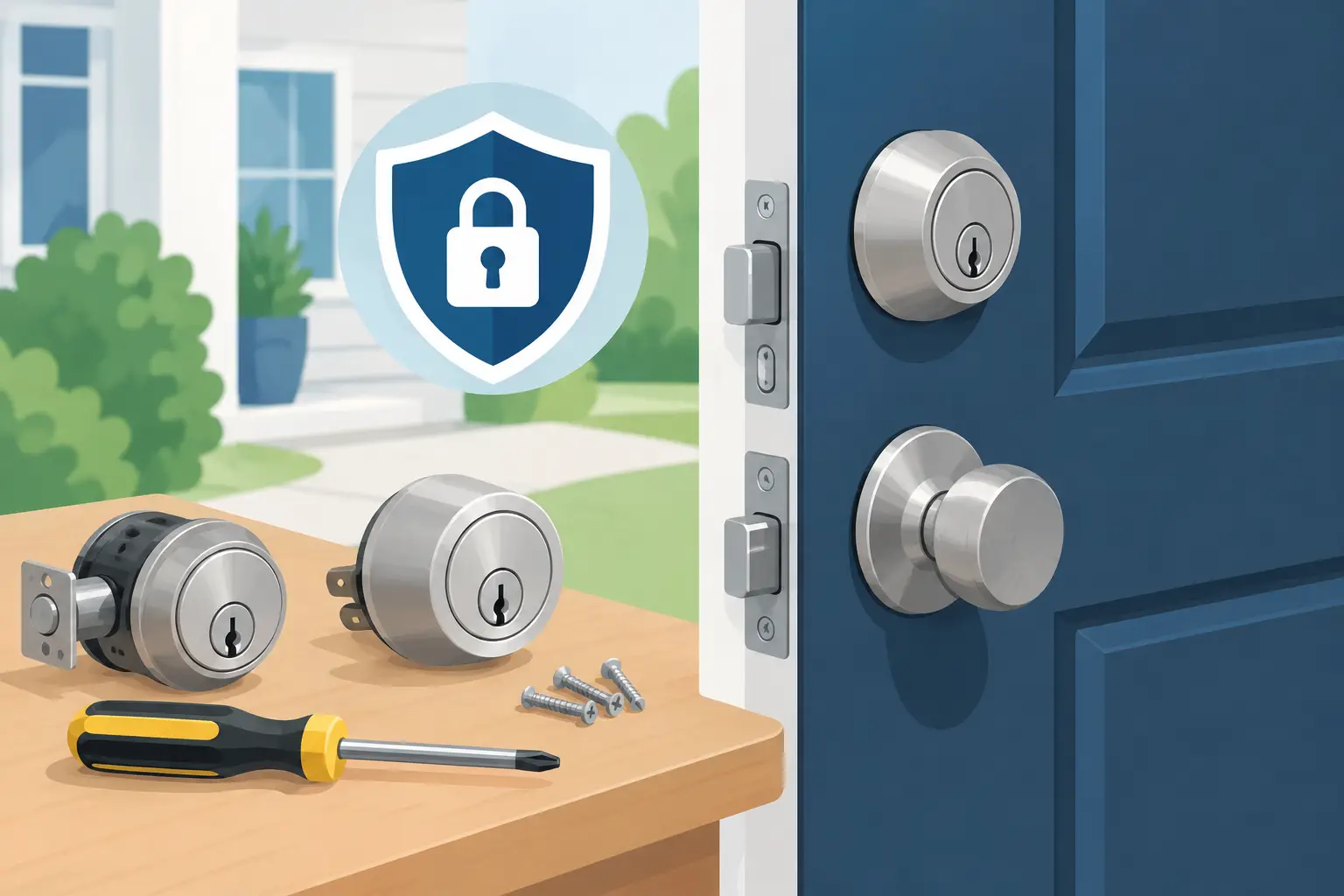
Replacement means removing the existing lock hardware and installing a new lock. It costs more than a simple rekey in many cases, but it solves problems that rekeying cannot fix. New pins will not repair a deadbolt that binds, a cylinder that is worn out, or a latch that fails to catch.
Choose replacement when the lock has been forced, drilled, bent, severely corroded, or damaged during a break-in. Even if it still turns, internal damage can make the lock unreliable. A door that does not lock consistently is not secure just because a key operates it.
Replacement is also the right call when your current hardware is low quality or outdated. Older locks may offer less resistance to picking, bumping, prying, or forced entry than modern high-security options. If you are upgrading an exterior door, a stronger deadbolt, reinforced strike plate, and properly installed hardware can make a meaningful difference.
Aesthetic changes matter, too. If you are renovating, changing finishes, replacing a door, or moving from separate knobs and deadbolts to a single handleset, replacement gives you more control over the final look and function. Smart locks, keypad locks, restricted-key systems, and high-security cylinders generally require a hardware upgrade rather than a standard rekey.
Signs Your Lock Should Not Be Rekeyed
A lock that is difficult to operate is not always a rekeying candidate. Sometimes the issue is a misaligned door or strike plate, and a repair may solve it. Other times, the lock has reached the end of its service life.
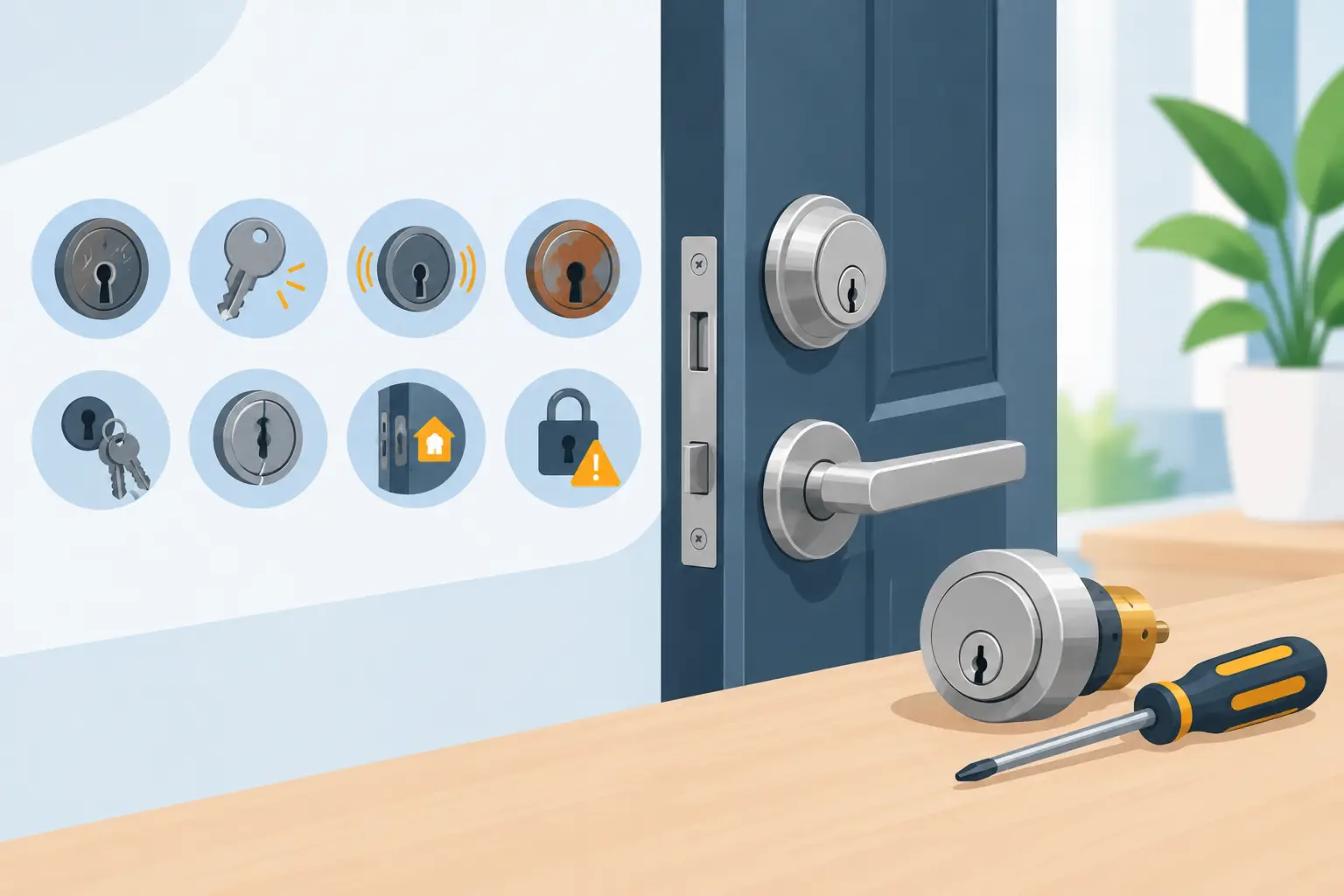
Replacement should be strongly considered if you notice several warning signs: the key must be jiggled to turn, the deadbolt will not fully extend, the thumbturn feels loose, the cylinder spins, the lock is visibly cracked, or there are signs of forced entry. The same applies if the door frame is damaged or the strike plate screws are short and pulling loose from the wood.
A professional inspection is valuable here because the lock is only one part of the system. A good deadbolt on a weak frame or misaligned door still leaves a security problem. The goal is not simply to get the key turning again. The goal is to make sure the door closes, latches, and resists forced entry as it should.
Rekeying Versus Replacement After a Break-In
After a break-in, speed matters, but so does choosing the right repair. If entry was gained through a lost or stolen key and the lock shows no damage, rekeying may immediately stop that key from working. It can restore control quickly while keeping costs reasonable.
If the lock, door, frame, or strike plate was pried, kicked, or otherwise forced, replacement is usually the safer choice. The visible damage may only tell part of the story. A technician can check whether the latch, bolt, cylinder, mounting screws, and door alignment remain dependable.
Do not assume a door is secure because it can be locked from inside after an incident. A compromised lock can fail at the worst possible time. For exterior doors, consider whether the event also calls for a deadbolt upgrade, reinforced strike hardware, or a different key-control setup.
Cost, Convenience, and Long-Term Value
Rekeying typically uses less new hardware and less installation work, making it the more budget-friendly option when the existing lock is healthy. It is a focused solution: old keys stop working, new keys take over, and your current hardware remains in place.
Replacement has a higher upfront cost because it includes new hardware and installation. Yet it can provide better value when you would otherwise be paying to service a lock that is already worn, weak, or incompatible with your needs. Replacing a failing lock once is usually better than repeatedly dealing with sticking keys, lockouts, and unreliable operation.
There is also a middle ground. A locksmith may recommend repairing a minor alignment issue, rekeying a sound cylinder, or replacing only one damaged component instead of the entire lock. Honest service means recommending the work that solves the problem, not automatically selling the most expensive option.
A Practical Decision for Homes, Rentals, and Businesses
For a homeowner who just moved in, rekeying exterior doors is often the first smart security step. For a landlord between tenants, it is a fast way to reset access while preserving usable hardware. For a business, rekeying may protect access after staffing changes, while a master-key or restricted-key upgrade may make more sense for a growing operation.
Replacement becomes more compelling when security needs have changed. A basic lock may have been acceptable years ago, but a ground-floor office, rental property, detached garage, or frequently used side entrance may now need stronger hardware and better key control. If several keys have been lost, copied, or passed around, a new system can bring order back to access management.
One important exception is automotive locks. Vehicle keys often contain transponders, remotes, or electronic programming, so the choice is not as simple as rekeying a house lock. Lost car keys, damaged ignitions, and remote failures need vehicle-specific locksmith service.
Get the Right Fix Without Guesswork
When you are standing outside with a key that no longer works or looking at a damaged lock after a break-in, you should not have to diagnose the hardware alone. Free Eagle Locksmith can assess the lock at your Twin Cities home, office, or property and explain whether rekeying, repair, or replacement is the safer choice.
If the lock is sound, a rekey can restore peace of mind quickly. If the hardware is damaged or weak, replacing it before it fails again protects more than the door – it protects the people and property behind it. Call for help as soon as you see a security concern, and make the decision based on the lock’s real condition, not just the fastest temporary fix.