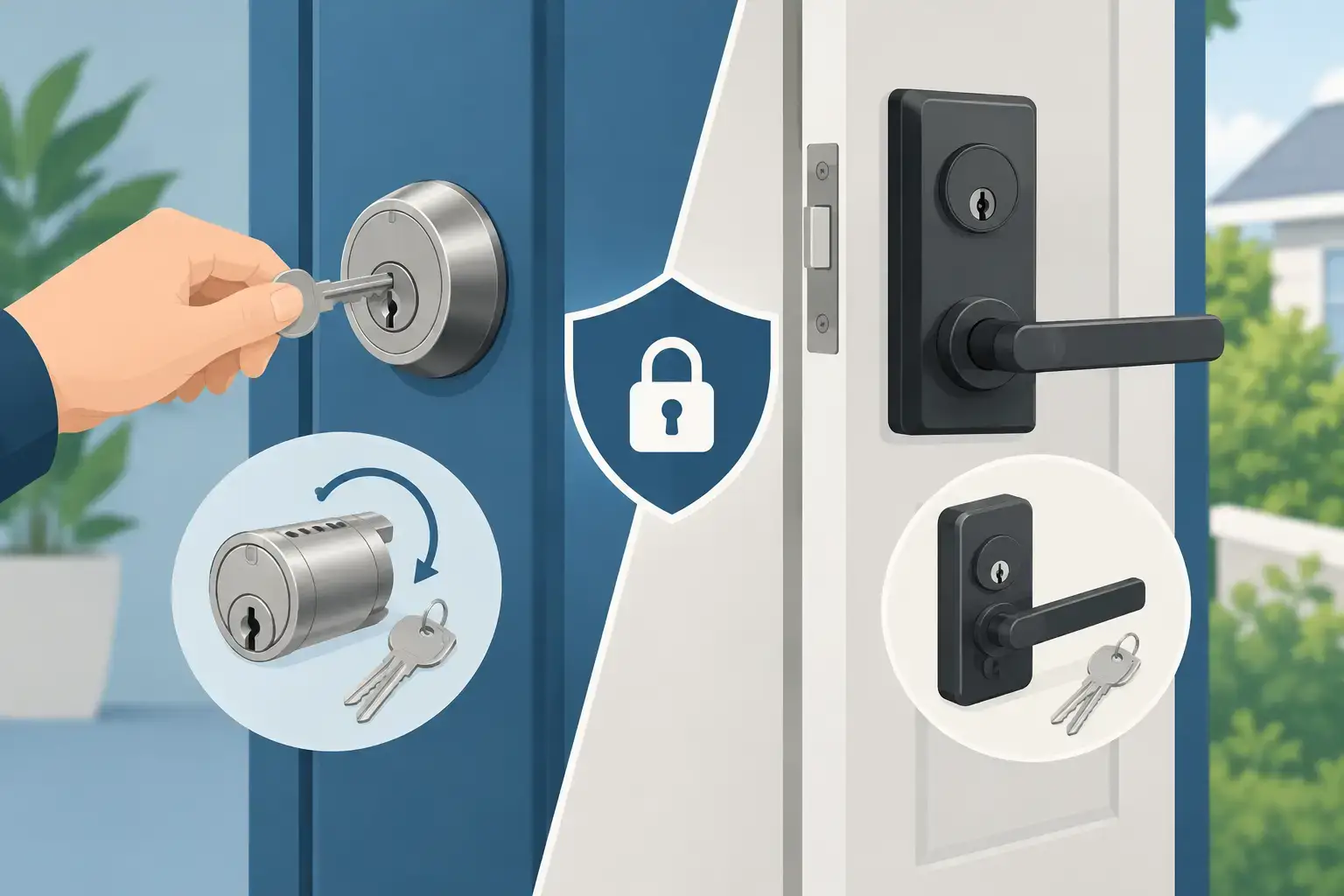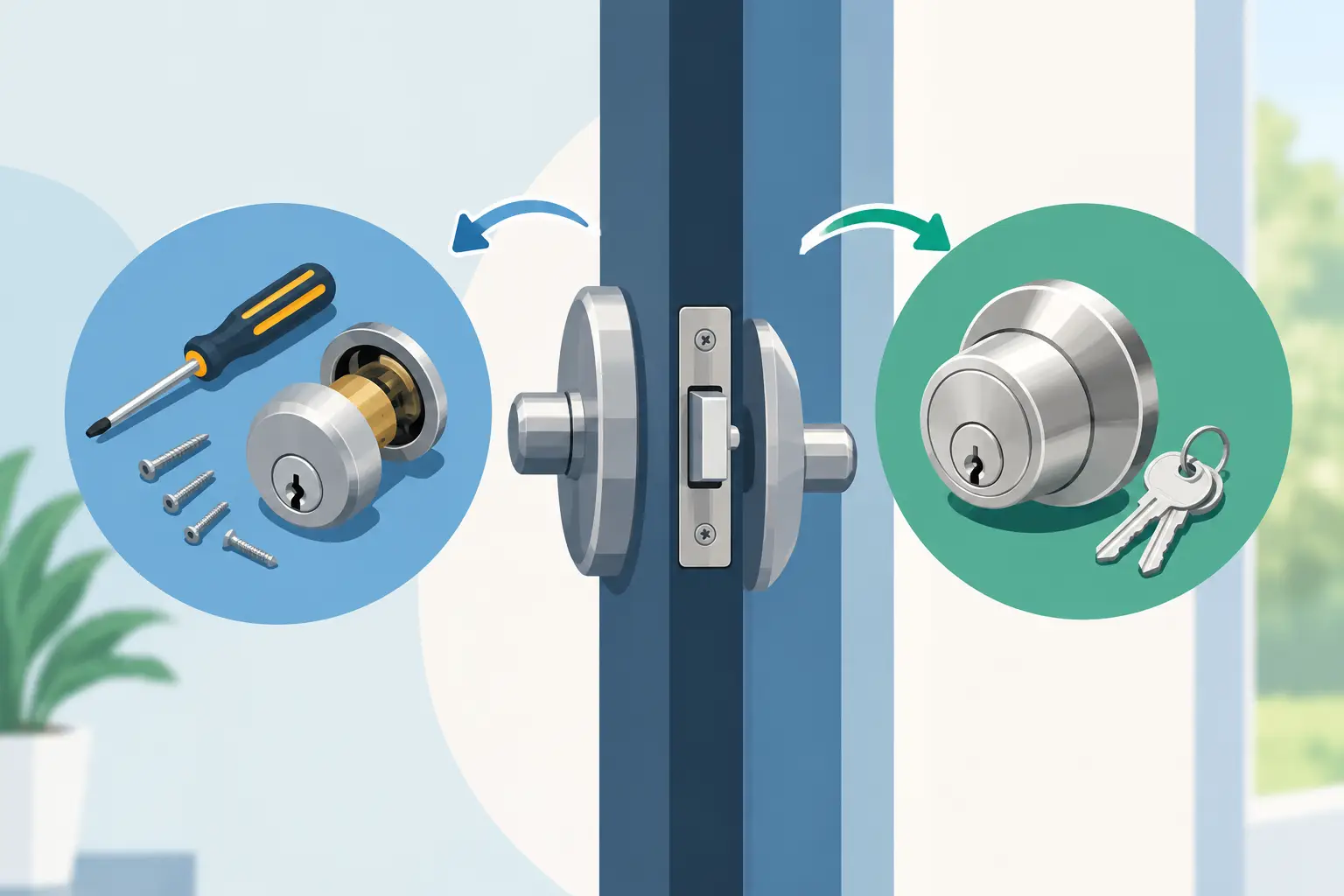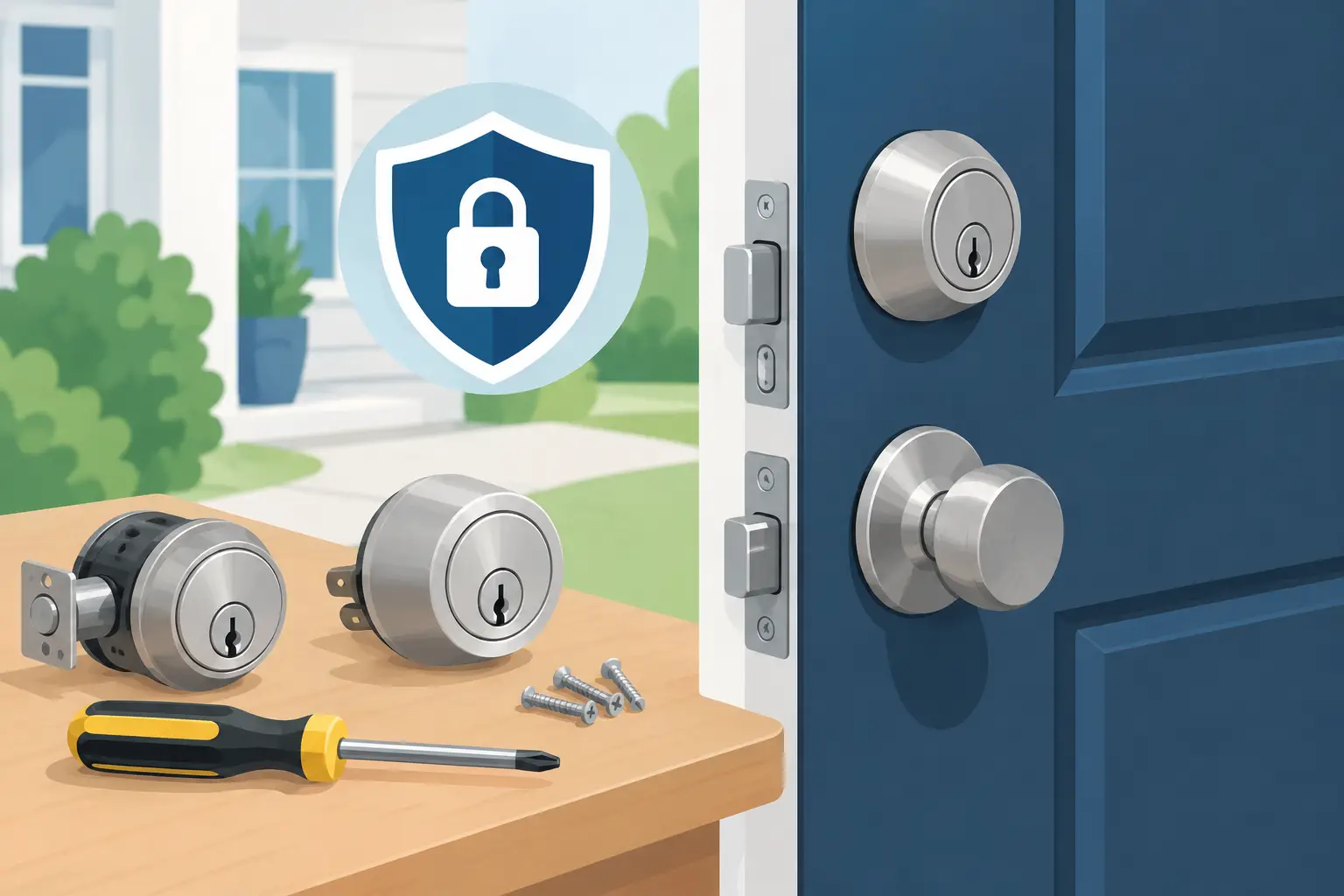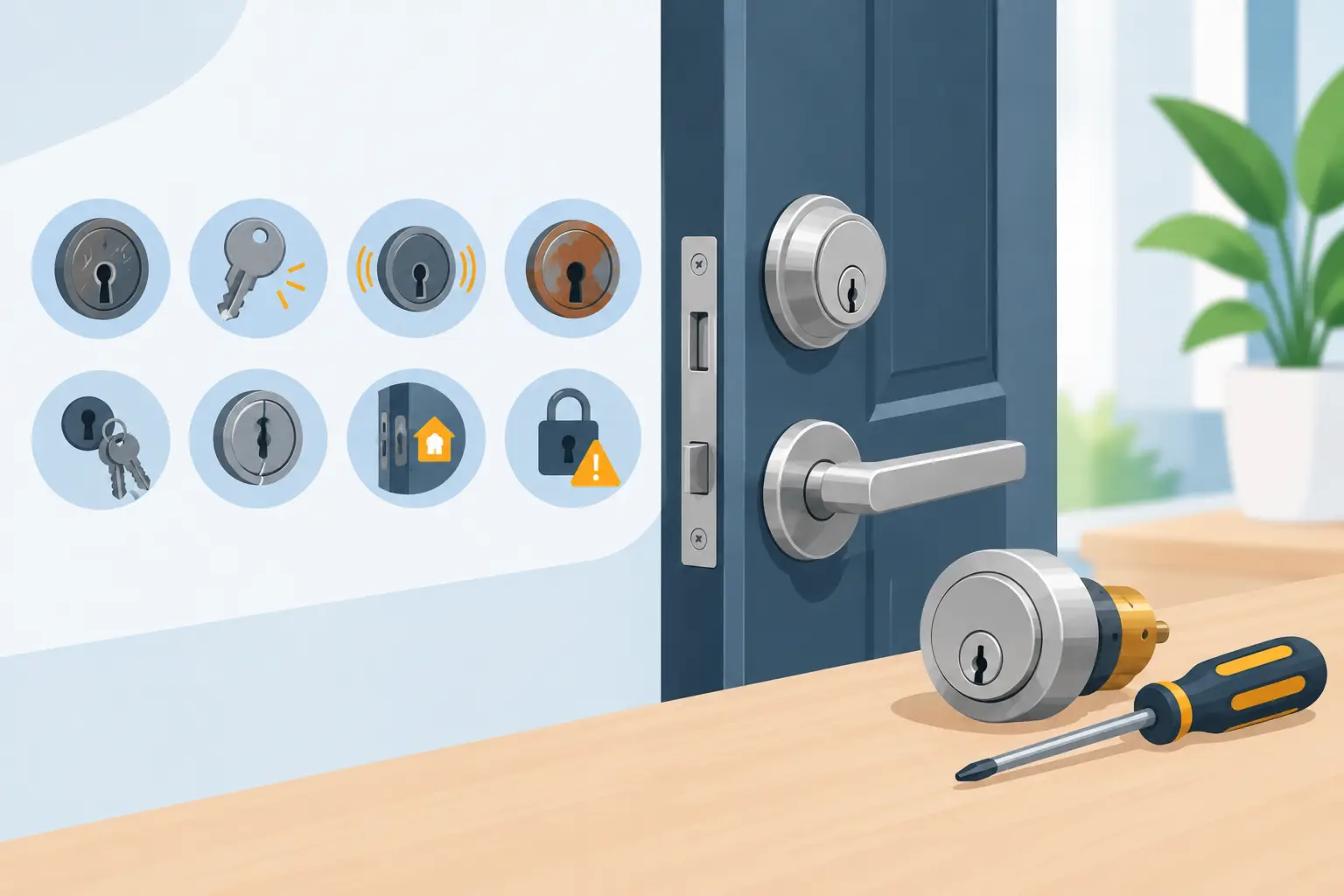

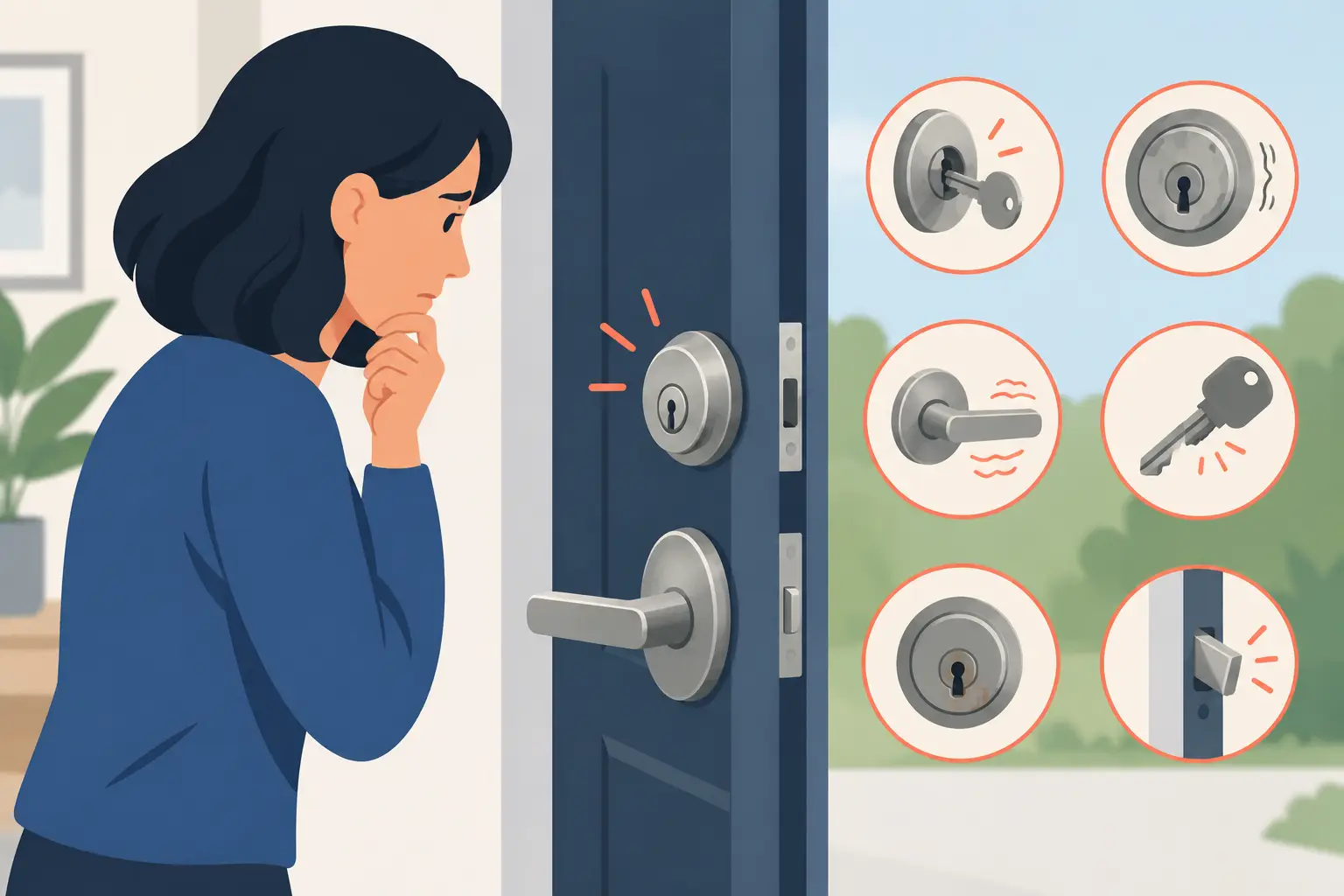
A door lock rarely fails at a convenient time. It may stick when you are leaving for work, refuse to turn after a long night, or leave your home or business less secure after a break-in. Knowing the signs your door lock failed can help you act before a small hardware problem becomes a lockout or security emergency.
A lock that is hard to use is not always broken beyond repair. Cold Minnesota weather, a dirty keyway, loose hardware, and a shifted door can all cause trouble. But repeated problems deserve attention. If your lock cannot reliably secure your property or give you access, it is time to have it checked.
8 Signs Your Door Lock Failed or Is Failing
1. Your key will not turn
A key that slides into the lock but will not turn is one of the clearest warning signs. You may feel resistance, have to wiggle the key, or need to push the door while turning it. Sometimes the cause is a misaligned latch or strike plate. Other times, worn pins or internal parts inside the cylinder are no longer lining up correctly.
Do not force the key. Excess force can snap it inside the lock, turning a repair call into a broken-key extraction and possible lock replacement. If your key suddenly stops turning in a lock that used to work normally, get professional help before you are locked out.
2. The key is difficult to insert or remove
A key should enter and come out smoothly. If it catches, needs several attempts, or feels like it is scraping inside the keyway, the lock may be dirty, damaged, or wearing out. A bent or badly worn key can also be the culprit.
Try a spare key if you have one. If the spare works well, have a new key cut from a good original rather than continuing to use the damaged key. If both keys stick, the problem is likely inside the lock. Avoid spraying household oils or heavy lubricants into the cylinder. They can collect dust and make the issue worse over time.
3. The deadbolt will not extend fully
When you turn the thumbturn or key, the bolt should move fully into the door frame with little effort. If it stops halfway, drags, or only locks when you lift or pull the door, your lock is not providing dependable security.
This is often caused by a door that has shifted with weather, age, or settling. It can also mean the strike plate is loose or the deadbolt mechanism is failing. Either way, a bolt that does not fully engage may be easier to force open and can leave you stuck outside when the door is closed.
4. The lock is loose, wobbly, or separating from the door
A doorknob, lever, deadbolt, or lock cylinder should feel firmly attached. If the hardware spins, wiggles, hangs loose, or pulls away from the door, do not ignore it. Loose locks can damage the door further and may stop working without warning.
Sometimes tightening mounting screws solves a minor issue. However, stripped screws, a cracked door, worn internal parts, or damage from an attempted forced entry require a more complete repair. Commercial doors in busy offices and rental properties are especially prone to loosening because they are used constantly.
5. The latch does not catch when you close the door
A door that will not stay shut is more than an inconvenience. If the latch does not catch in the strike plate, the door may open with a push, even if you think it is secure. You might notice the door bouncing back open, rattling in its frame, or needing a hard shove to latch.
Humidity, temperature swings, and building movement can affect door alignment. A worn latch or an improperly positioned strike plate can do the same. Until it is repaired, do not rely on the door to secure your home, office, storage area, or private workspace.
6. You can lock the door, but it will not unlock
This situation often becomes an emergency. A deadbolt may turn into the locked position but refuse to retract, leaving you unable to get back in or, in some cases, unable to open the door from inside. Internal lock components can break after years of use, especially in older or lower-quality hardware.
If someone is trapped inside, there is a medical concern, or the door is blocking a safe exit, call emergency services first. For a non-life-threatening lock failure, a 24/7 locksmith can assess the mechanism, restore access, and recommend whether repair or replacement makes more sense.
7. The lock has visible damage or signs of tampering
Scratches around the keyway, a bent latch, a damaged strike plate, a cracked deadbolt, or a cylinder that looks drilled or pulled outward are serious security warnings. Even if the lock still turns, it may no longer protect the property properly.
After a break-in or attempted break-in, replacement is usually the safer choice than a quick adjustment. The door frame, hinges, strike plate, and surrounding trim should also be inspected. A new lock on a weakened frame may not solve the real security problem.
8. Your lock is old, unreliable, or no longer matches your security needs
Not every failed lock looks damaged. A lock that works only after repeated attempts, has been rekeyed many times, or uses an outdated key system can be unreliable even if it still opens the door today. The same applies after you move into a home, take over a commercial space, lose keys, dismiss an employee, or end a tenant arrangement.
Rekeying may be the right answer when the hardware is in good condition but key control is the concern. Replacement is often better when the lock is worn, damaged, low quality, or incompatible with the level of security you need. For businesses, that may mean high-security hardware or a master-key system that gives employees access only where they need it.
Is It the Lock, the Key, or the Door?
The symptoms can look similar, which is why a quick diagnosis matters. If one key works and another does not, start with the key. If the deadbolt works smoothly while the door is open but binds when the door is shut, alignment is likely part of the problem. If the lock sticks in both situations, internal wear or damage is more likely.
Weather can complicate the picture in the Twin Cities. Freezing temperatures and moisture may expose a problem that was already developing, while seasonal swelling and shifting can move a door enough to throw off alignment. A temporary change in weather does not mean you should ignore a lock that repeatedly sticks or fails to latch.
What to Do When a Door Lock Fails
Start by staying calm and avoiding force. Do not kick the door, pry at the lock, or keep twisting a key that is resisting. Those actions can damage the door, break the key, and raise the cost of the repair.
If you are outside, use another safe entrance only if you are authorized to do so. If there is no secure way in, call a mobile locksmith rather than attempting to bypass the lock yourself. If you are inside and the lock will not release, make sure everyone can exit safely through another route if needed.
For a damaged lock after a break-in, protect the property first. Keep people away from the compromised entrance, document damage if needed for an insurance claim, and arrange prompt lock repair or replacement. Do not wait until the next day if the door cannot be secured overnight.
When to Call for Immediate Locksmith Service
Call for immediate help when you are locked out, a key breaks in the lock, the door cannot be locked, the lock has been tampered with, or the hardware fails at a home, office, or rental property. These are access and security problems, not jobs to put off.
For Twin Cities customers, Free Eagle Locksmith provides mobile 24/7 service for lockouts, broken keys, lock repair, replacement, rekeying, and security upgrades. A prepared technician can determine whether the issue is the cylinder, latch, deadbolt, key, door alignment, or strike plate and help restore both access and peace of mind.
A reliable lock should not make you wonder whether you will get in, get out, or keep the door secure. When it starts giving you warning signs, deal with the problem while you still have options.