
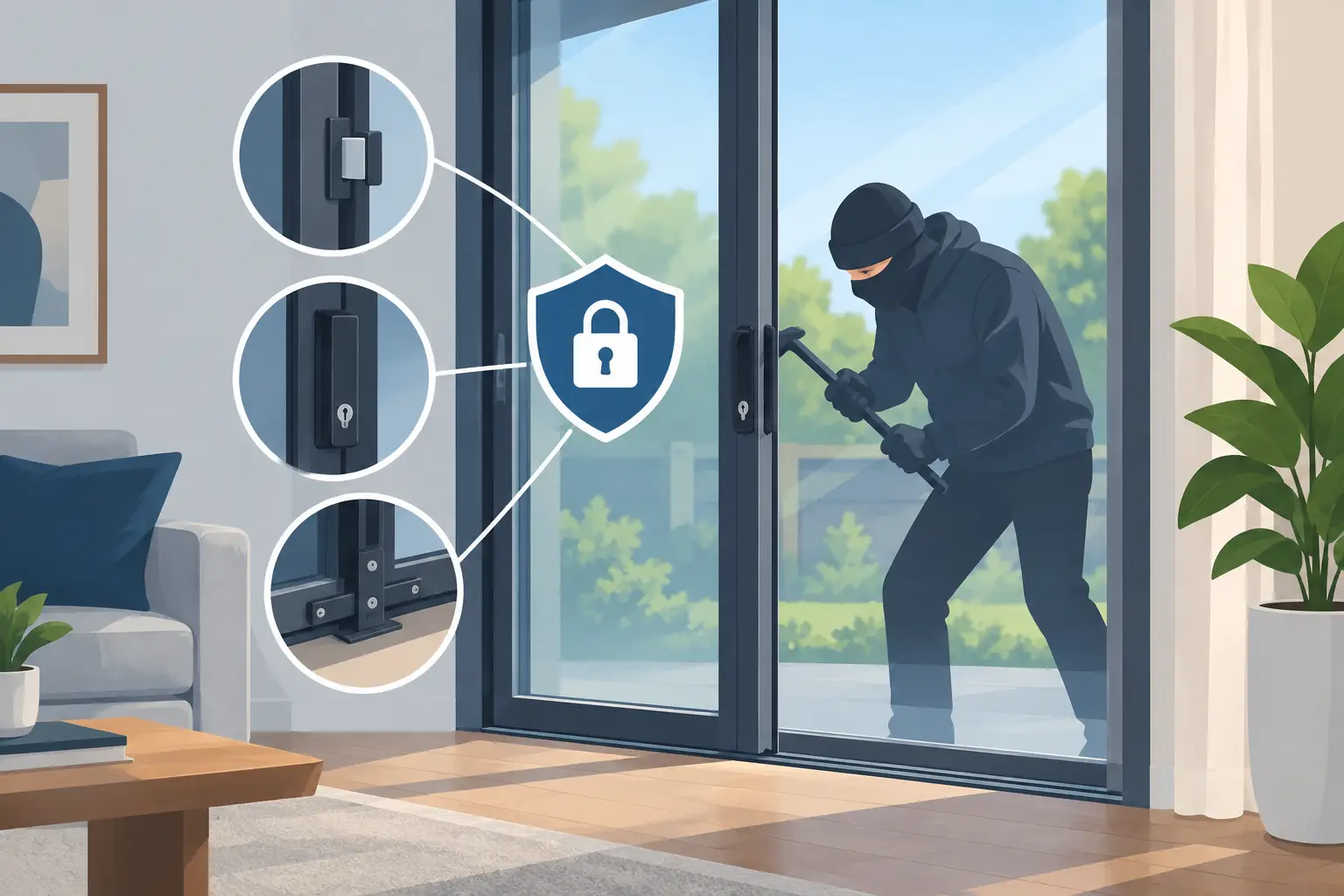
A sliding glass door can bring in welcome light, but its large glass panel and simple factory latch can also make it a weak point. Knowing how to secure sliding doors means protecting more than the handle lock. A good setup stops the door from sliding, lifting out of its track, or giving way after someone damages the glass.
For Twin Cities homeowners, renters, and property managers, the best answer is usually layered security: a reliable lock, a physical track barrier, a door that cannot be lifted, and clear visibility around the entry. Start with the simplest fixes, then upgrade the hardware if the door is loose, worn, or has already been targeted.
Start With the Sliding Door Lock
Most sliding doors have a hook-style latch at the handle. When it is adjusted and in good condition, it provides basic security. The problem is that many older doors have a loose latch, worn strike plate, or frame that has shifted over time. A latch that does not fully catch is not a lock you should trust.
Close the door and lock it, then try to move the panel gently. If it rattles, opens slightly, or feels as though it could be forced sideways, the lock needs attention. Sometimes the repair is as simple as aligning the strike plate or adjusting the rollers so the door sits correctly in the frame. In other cases, replacing the latch with a stronger keyed lock or a secondary lock is the better move.
A keyed lock can add protection, especially when the door is out of sight from the street or backs up to an alley, deck, or yard. But keep fire safety in mind. Anyone inside must be able to exit quickly in an emergency. Do not install a security device that traps household members indoors or blocks a required exit.
How to Secure Sliding Doors With a Track Bar
A track bar is one of the fastest, most effective ways to reinforce a sliding door. It sits in the bottom track or behind the moving panel and prevents the door from being pushed open, even if someone defeats the primary latch.
A properly sized metal security bar is the strongest choice because it is difficult to bend or kick aside. A snug wood dowel can provide a low-cost temporary improvement, but it should fit tightly and be checked regularly for cracking, warping, or slipping. Do not use a loose piece of wood that can be lifted out easily from outside.
Measure the clear space in the track when the door is fully closed. The bar should press firmly between the moving panel and the opposite frame without putting enough force on the glass to damage it. If you use the door often, choose an adjustable bar with a holder so it can be stored nearby rather than left on the floor.
A track bar has one major trade-off: it must be removed before opening the door. That is fine for a patio door that stays closed overnight, but it may be inconvenient for a frequently used entrance. A secondary pin lock can be a better daily-use option.
Stop the Door From Being Lifted Out
Many sliding doors can be lifted upward and pulled out of the lower track if the rollers are poorly adjusted or the frame lacks anti-lift protection. This is especially common with older patio doors. A person may not need to break the lock if the whole panel can be removed.
Check the gap between the top of the sliding panel and the upper frame. If there is excessive space, adjust the bottom rollers so the door sits higher and rolls smoothly. Roller adjustment screws are often located near the bottom edge of the moving panel, though the exact location depends on the door model.
Anti-lift blocks or brackets installed along the upper track create a physical stop. They limit upward movement so the panel cannot clear the bottom track. These small additions matter because they address a different attack method than a latch or track bar.
If the door drags, jumps its track, or feels heavy when opening, do not force it. A door that is difficult to operate often has worn rollers, a bent track, or frame alignment issues. Fixing those problems improves daily use and makes the locking hardware work as intended.
Reinforce the Frame and Strike Area
Security hardware is only as strong as the surface holding it. A heavy-duty lock will not do much if its strike plate is fastened into thin material, loose screws, or damaged wood.
Inspect the frame around the latch for cracks, soft wood, loose fasteners, or signs that the strike plate has been pulled away. Replacing short screws with longer screws that reach solid framing can improve resistance, but screw length and placement matter. Screws that are too long or installed in the wrong spot can interfere with the door frame, glass, or track.
Vinyl, aluminum, and wood sliding doors all have different construction details. That is why a generic hardware fix does not always fit safely. If the latch no longer aligns, the frame is damaged, or the door has been forced during a break-in attempt, have the hardware inspected before relying on it again.
Add Glass Protection Where It Makes Sense
The glass in a sliding door is often the largest concern because an intruder may try to break a pane and reach the lock. Tempered glass is designed to break into small pieces, which reduces injury risk, but it can still leave an opening.
Security window film can help hold shattered glass together and slow forced entry. It is not a replacement for a lock or track barrier, and it will not make glass unbreakable. Its value is buying time, creating noise, and making a quick entry more difficult.
For doors in a high-risk or isolated location, consider impact-resistant glass or a professionally installed security screen. These upgrades cost more, but they may be worthwhile for a ground-level patio entrance that cannot be easily seen by neighbors. Avoid putting decorative coverings over the door that eliminate your ability to see outside. Visibility is part of security.
Use Light, Visibility, and Alarms to Your Advantage
Physical locks delay entry. Lighting and alarms increase the chance that an attempted entry is noticed. Keep the exterior area around the sliding door visible from inside the home and, where possible, from neighboring properties. Trim shrubs that give someone a concealed place to work on the door.
Motion-activated lighting is useful around decks, side yards, and rear entries. It should illuminate the approach without shining directly into bedrooms or creating glare that makes it harder to see outside. Indoor timers and exterior lighting also help a home look occupied when residents are away.
Door and glass-break sensors add another layer. A contact sensor can alert you if the door opens, while a glass-break sensor may detect the sound pattern of broken glass nearby. Neither prevents entry by itself, but an alarm can turn a quiet attempt into a fast retreat.
For a property manager, make sure tenants know how to use these devices. An alarm system nobody arms is not a dependable security measure.
Do Not Forget Everyday Habits
Even the best hardware cannot help if the sliding door is left unlocked. Make locking the door and placing the track bar a nightly routine, especially before leaving for work, traveling, or going to bed. Check that children and guests understand how the door locks without giving them access to exterior keys unnecessarily.
Keep keys controlled. Do not hide a spare key near the patio, under furniture, or in a planter beside the door. If you recently moved into a home, ended a tenancy, lost a key, or experienced a break-in, rekeying or replacing accessible exterior locks is a smart first step.
If you rent, ask the landlord before drilling into a door frame or installing permanent hardware. Many secondary locks and security bars can be fitted with minimal changes, but it is better to get approval than risk damage charges or a lease issue.
When a Sliding Door Needs Professional Repair
Call for help when the door will not lock, has been forced, has broken glass, or can be lifted from its track. Those are not issues to postpone. A damaged door can leave your home exposed even if it appears closed.
Free Eagle Locksmith provides mobile lock and security assistance throughout Minneapolis, Saint Paul, Coon Rapids, and surrounding Twin Cities communities. A technician can assess the latch, strike area, frame condition, and practical options for adding stronger access protection without making the door difficult to use.
Your sliding door should feel easy to open from inside and hard to defeat from outside. A properly adjusted lock, a solid barrier in the track, and a door that cannot be lifted out can turn a common weak spot into a far more secure entrance.