
A frozen lock can turn an ordinary Minnesota morning into a serious problem fast. Whether it is your front door, office entry, mailbox, or vehicle, knowing how to repair frozen locks safely can help you avoid a broken key, damaged lock cylinder, or hours stranded in the cold.
The key is not to force the issue. Ice, condensation, and wind-driven snow can freeze inside a keyway or around the moving parts of a lock. Applying too much pressure may snap the key or damage internal pins that were working perfectly before the temperature dropped.
Why locks freeze in Twin Cities winters
Locks freeze when moisture gets into the keyway, latch, or deadbolt mechanism and temperatures drop below freezing. That moisture may come from melting snow, freezing rain, condensation, wet gloves, or even humidity that settles inside an exterior lock overnight.
Vehicle locks are especially vulnerable after a car wash, snowstorm, or day of melting and refreezing. Residential and commercial locks can freeze when a door is exposed to blowing snow or when a worn weather seal lets moisture reach the hardware.
A lock may also feel frozen when the real problem is the door. Cold weather can cause wood doors to swell, metal frames to shift slightly, and weatherstripping to stick. In that situation, the key may turn but the deadbolt will not retract because the bolt is under pressure.
How to repair frozen locks safely
Start with the least aggressive solution. If you can see snow or ice packed around the lock, gently brush it away with a dry cloth or soft brush. Do not chip at the keyhole with a screwdriver, knife, or other hard object. Those tools can bend the keyway cover or damage the lock face.
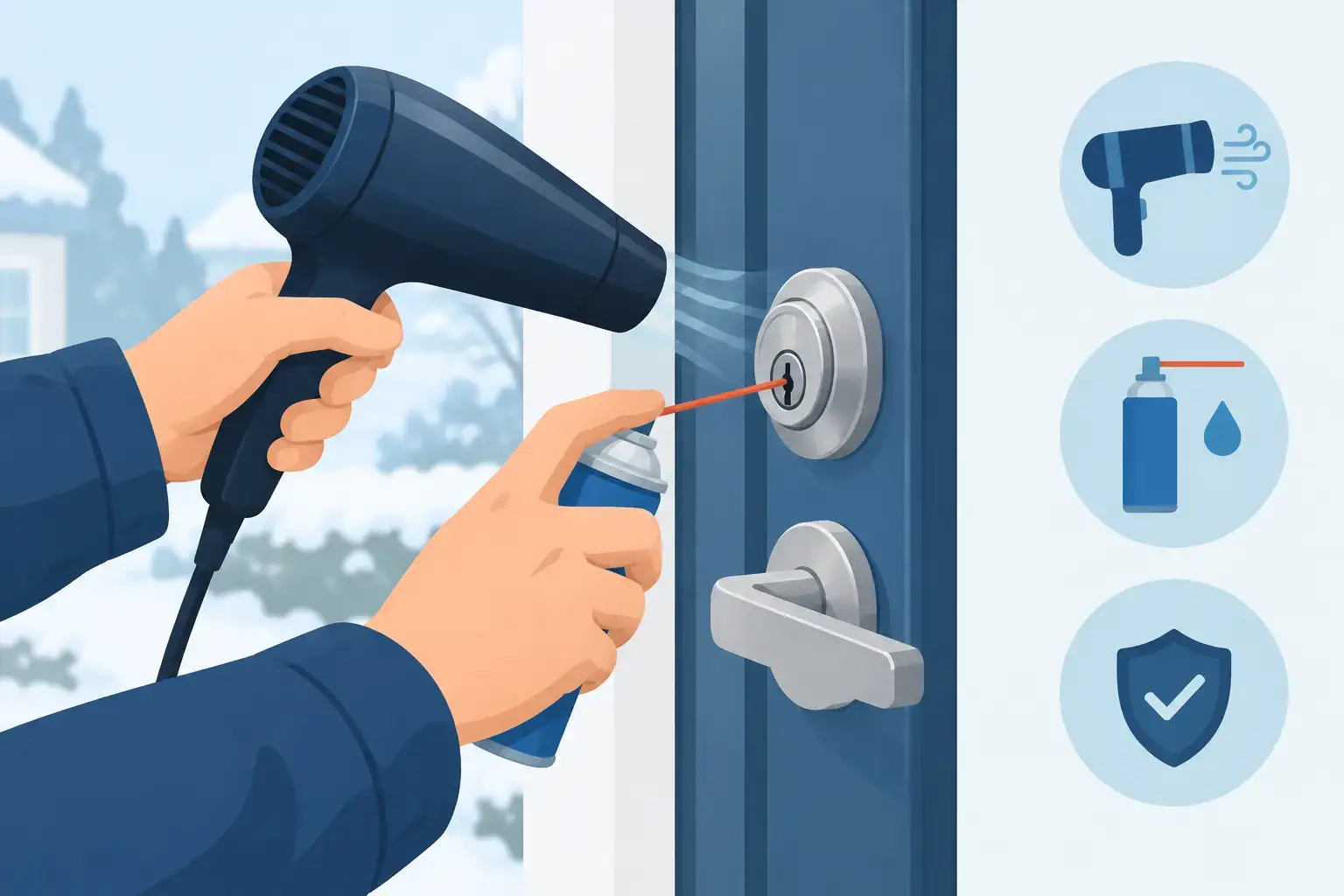
Use a commercial lock de-icer if you have one available. These products are designed to melt ice inside the lock without leaving excessive moisture behind. Insert the applicator carefully, use a small amount, and give it a moment to work before trying the key.
If lock de-icer is unavailable, a small amount of isopropyl alcohol can sometimes help displace moisture and melt light ice. Use it sparingly. Too much liquid can create another freezing problem later, especially if the lock is already exposed to severe wind and low temperatures.
Warm the key in your hands, a warm indoor space, or with a safe heat source away from the lock. Then insert it gently and move it slightly rather than forcing a full turn immediately. If the key begins to move, work slowly. A little patience is far less expensive than broken-key extraction.
When the key turns but the lock does not open, push or pull the door gently while turning the key. A deadbolt that is pressed tightly against the strike plate can feel frozen even when the cylinder itself is clear. Relieving pressure on the door may allow the bolt to move normally.
What not to do to a frozen lock
Avoid pouring boiling water on a lock. It may seem effective for a few minutes, but the water can cool quickly, seep deeper into the mechanism, and freeze again. Sudden heat can also affect finishes and surrounding hardware.
Never use an open flame, lighter, torch, or heat gun directly on a lock. Besides the fire risk, extreme heat can damage plastic trim, vehicle paint, weather seals, electronic components, and lubricants inside the lock.
Do not force the key. If it will not enter fully, turn, or come back out easily, stop. Keys often break because someone continues applying pressure after the lock has already told them there is a problem. A broken key inside a frozen lock turns a simple access issue into a more involved repair.
Frozen house and office locks need a closer look
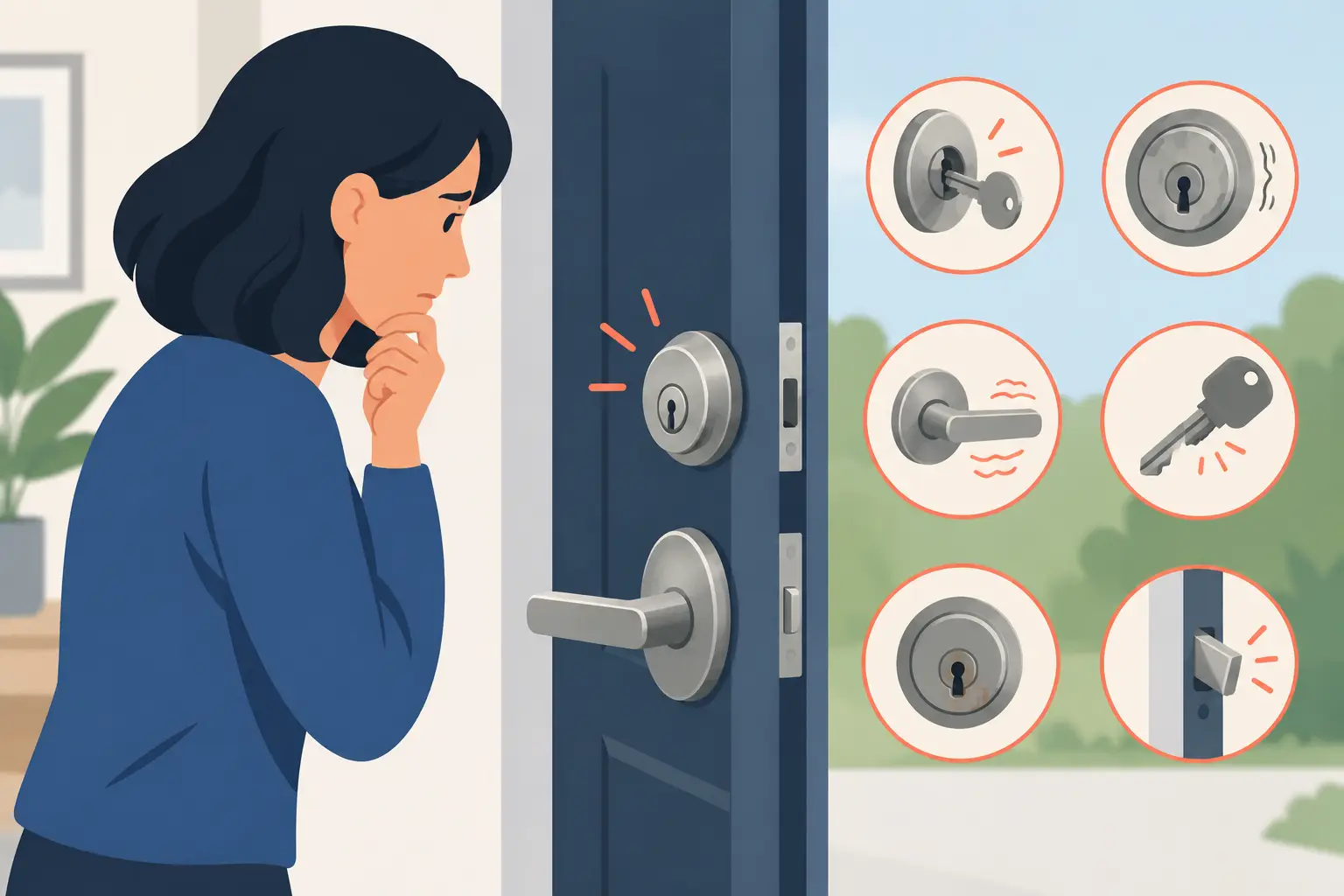
Exterior door locks on homes, apartments, and businesses can freeze because the hardware is worn or because the door is no longer aligned correctly. If a deadbolt is difficult to operate even in mild weather, winter will usually make the problem worse.
After you regain access, test the lock several times with the door open and closed. If it works easily with the door open but binds when closed, the strike plate may need adjustment. If the key sticks, rotates roughly, or requires repeated attempts, the cylinder may need professional service or replacement.
For commercial properties, do not ignore a recurring frozen entry lock. Employees, tenants, customers, and delivery teams may depend on that door. A lock failure at opening time can disrupt the entire day and leave a property unsecured if staff resort to propping a door open.
What to do when a car door lock is frozen
A frozen vehicle lock can leave you exposed to the cold, especially when the remote key fob also fails to open the doors. Modern vehicles may have a hidden mechanical keyway under a handle cover, but that keyway can still freeze after snow and ice build up around the door.
Clear snow and ice carefully from the handle area. Use lock de-icer on the mechanical keyway if accessible, then insert the key without twisting aggressively. Pulling the handle hard can damage the handle mechanism or weather seal if the door itself is frozen shut.
If the key opens the door but the vehicle will not start, that may be a separate battery, key fob, ignition, or immobilizer issue. Do not keep forcing the key in an ignition cylinder. Automotive lock and key systems can be more delicate than they appear, particularly on newer vehicles with transponder keys and electronic security features.
When a frozen lock needs a locksmith
Call a professional when the key is broken, the lock will not turn after safe de-icing attempts, or you are locked out in dangerous cold. It is also time to call when the lock was damaged during a break-in, the door will not secure after opening, or a business entry point cannot be accessed.
A mobile locksmith can identify whether ice is the real cause or whether the cylinder, latch, door alignment, or key has failed. That distinction matters. De-icing a lock with worn internal components may restore access temporarily, but it will not fix the underlying security concern.
For Twin Cities home, business, and vehicle emergencies, Free Eagle Locksmith provides 24/7 mobile service with technicians dispatched directly to your location. Fast help is especially valuable when a frozen lock is keeping you outside, delaying your business, or leaving a door unable to secure properly.
Prevent frozen locks before the next cold snap
The best repair is avoiding the problem before temperatures plunge. Keep exterior lock hardware clean and dry when possible, and use a lock lubricant made for cold-weather conditions according to the product directions. Avoid heavy oils and grease, which can collect dirt and become sticky over time.
Check weatherstripping, door sweeps, and exterior trim around entry doors. Reducing moisture and wind exposure helps protect the lock and makes the door easier to operate. If a key is bent, worn, or hard to use, have a fresh key cut before it fails on a subzero night.
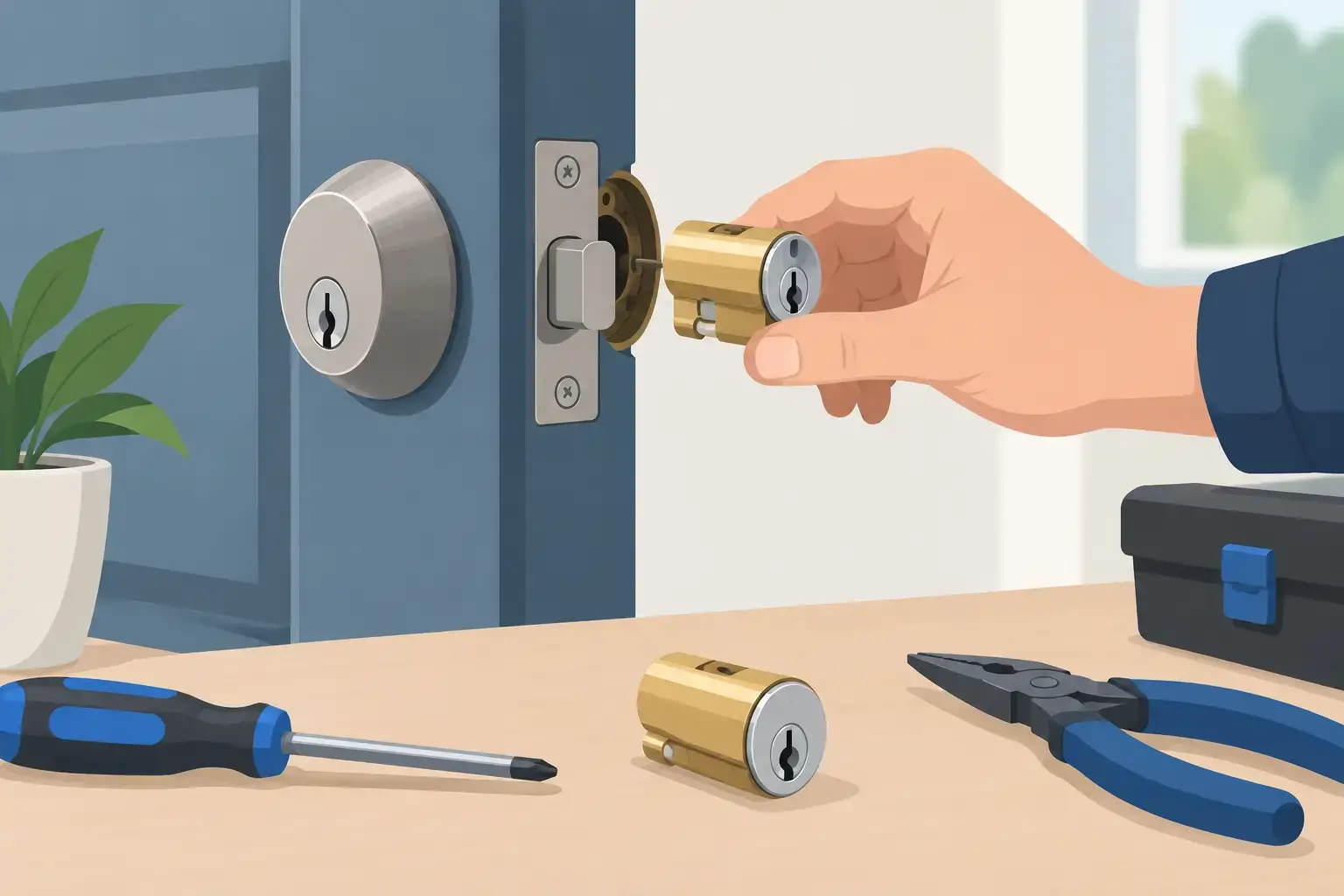
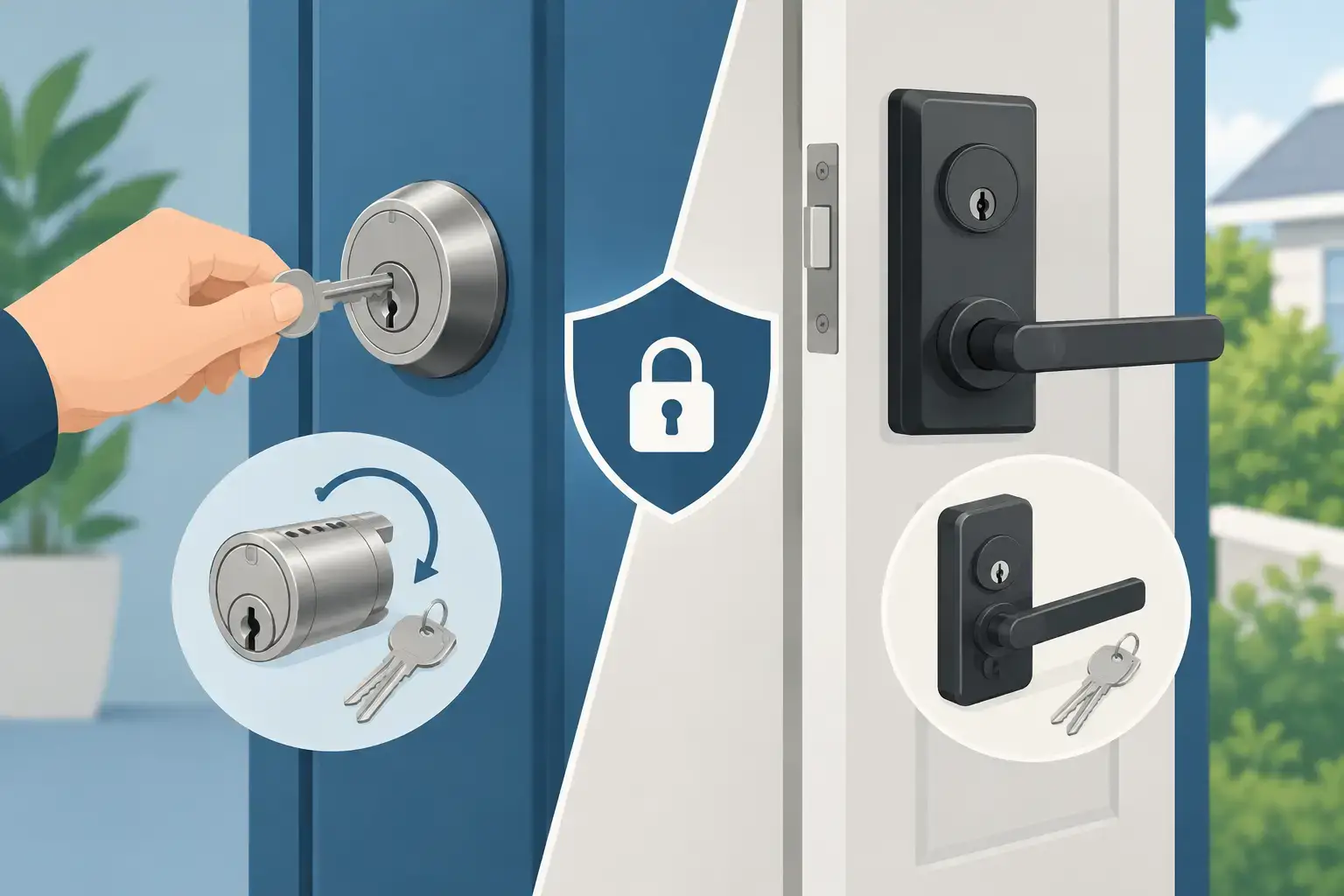
Property owners should also pay attention to locks that repeatedly freeze. Frequent freezing may point to a worn cylinder, poor door alignment, damaged hardware, or a door that needs a more weather-resistant lock setup. Replacing a failing lock before an emergency gives you more control over cost, hardware choice, and scheduling.
When the temperature drops, treat a frozen lock gently and act early. A careful de-icing attempt may solve the problem, but a lock that resists should be handled by a professional before a small winter inconvenience becomes a broken key, damaged door, or security risk.