
A broken door frame, a pried lock, or a missing key changes more than one entry point. It changes how safe your home or business feels. After police have completed their work and the property is secure, many people ask whether they should replace locks after break in damage or simply rekey them. The right answer depends on how entry was gained, what hardware was damaged, and whether anyone could still have a working key.
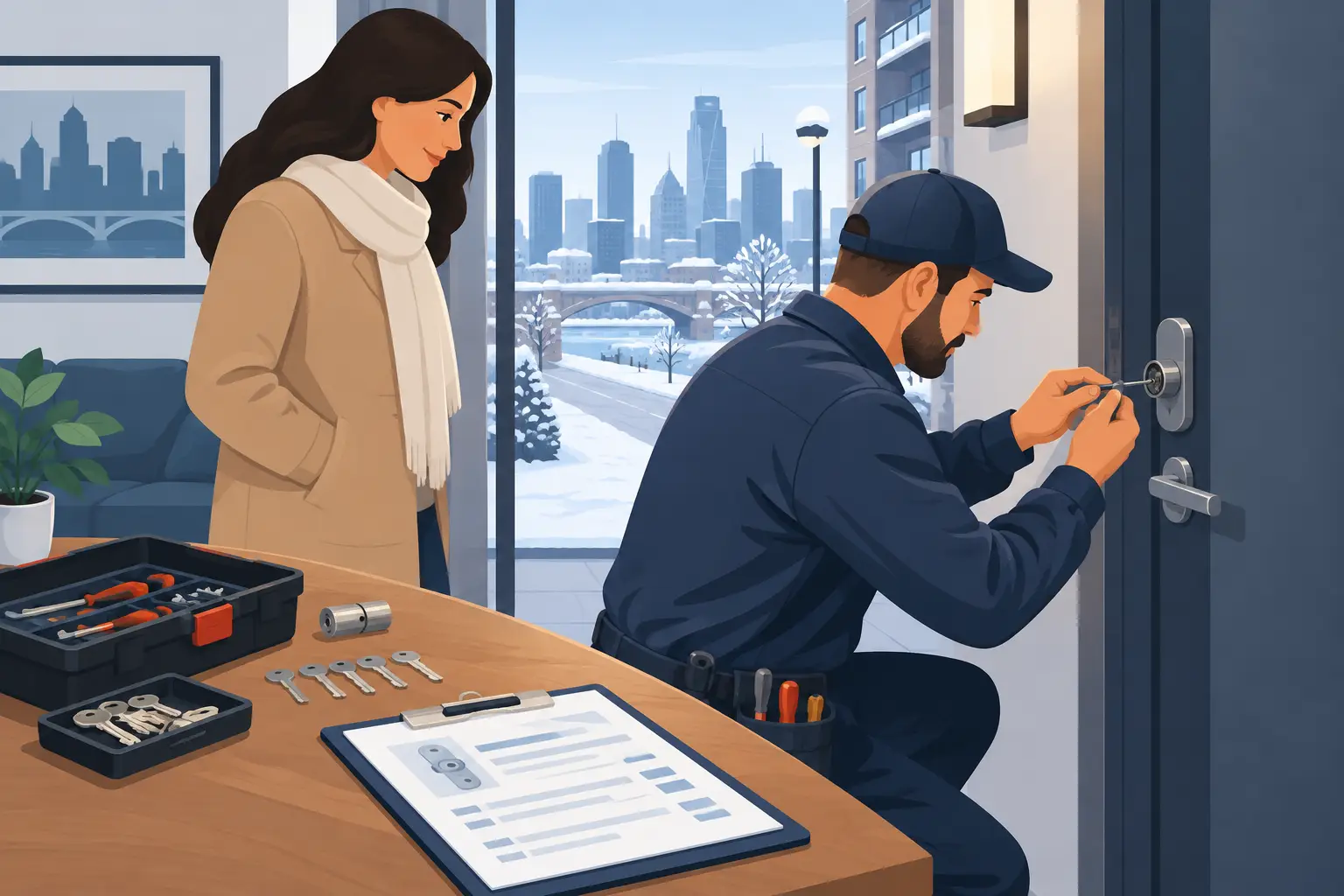
For Twin Cities property owners, the first priority is restoring security quickly. A lock that still turns is not always a lock you should trust. If a burglar forced the door, copied or stole keys, or damaged surrounding hardware, a professional locksmith can inspect the full entry system and recommend the fastest practical fix.
When You Should Replace Locks After a Break In
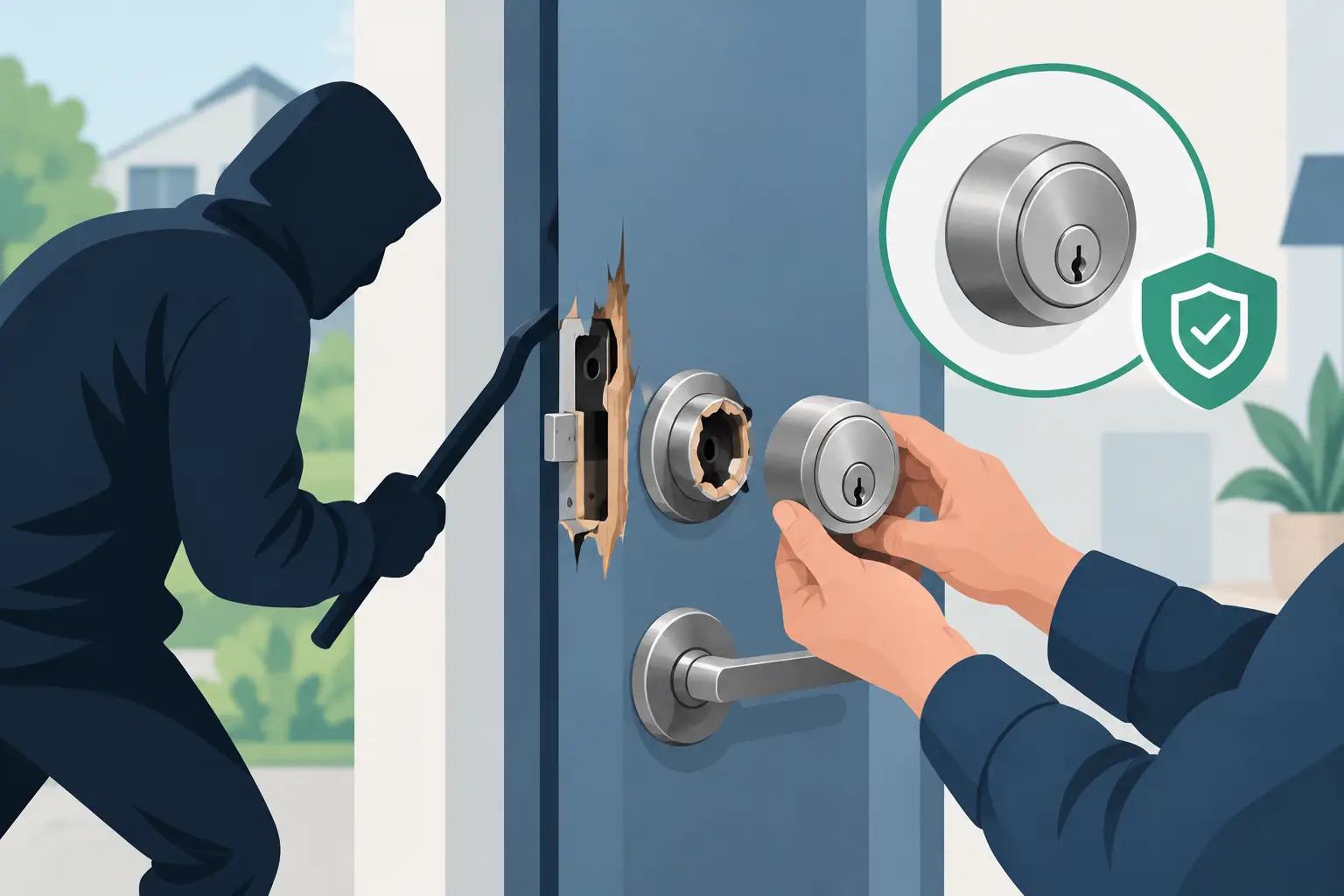
Lock replacement is usually the right move when the lock body, deadbolt, strike plate, door edge, or frame has been damaged. Burglars often use force against the weakest part of an entry door. Even if the key still works, internal components may be bent, loose, or weakened after prying, kicking, drilling, or pulling.
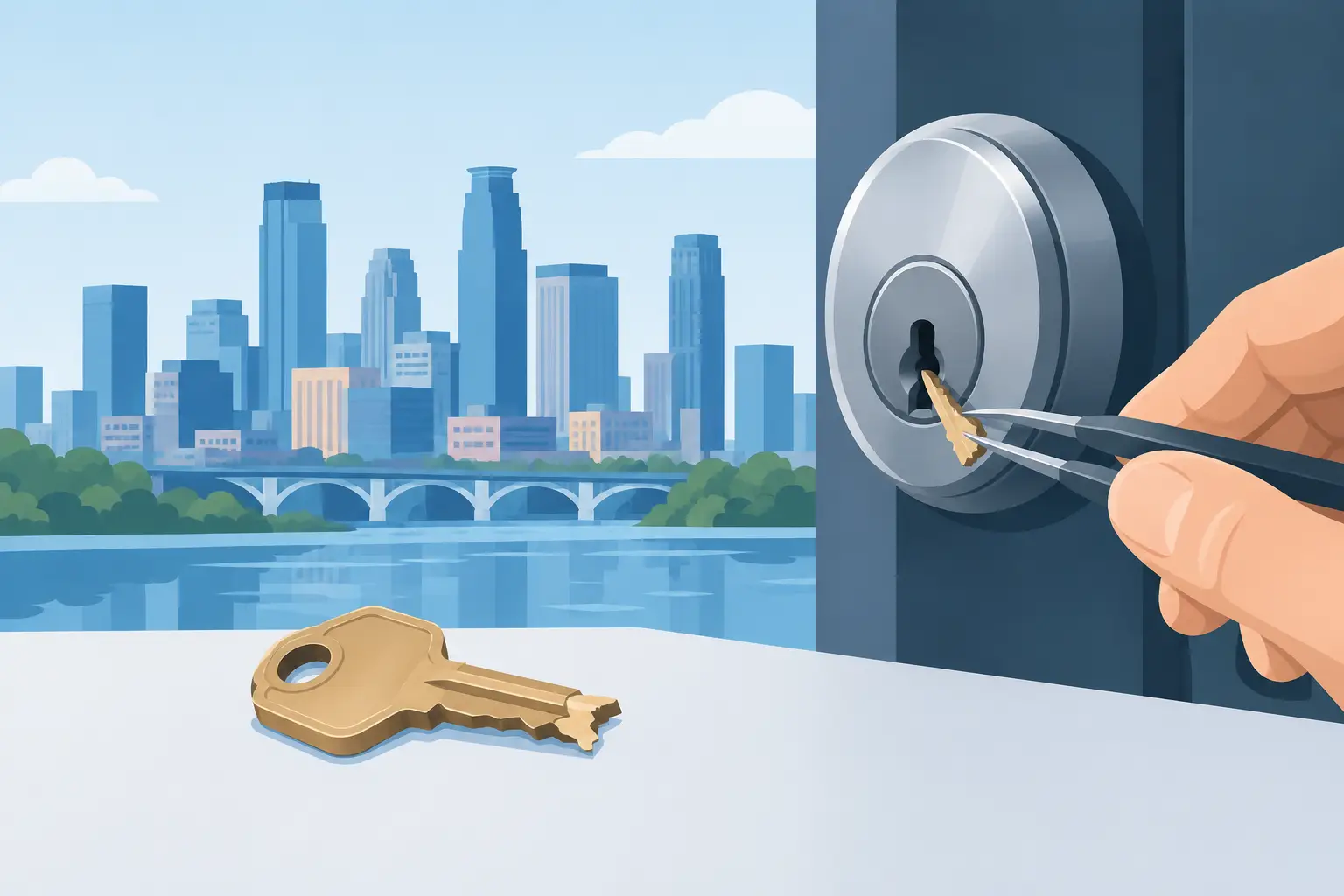
Replace the lock when you see visible damage such as a bent deadbolt, a loose cylinder, scratches around the keyway, a cracked handle, or a latch that no longer extends smoothly. Do not rely on a damaged lock just because it can be locked from inside. A weakened lock may fail when you need it most.
Replacement also makes sense when the existing hardware is low quality or outdated. A basic lock that was defeated easily should not necessarily go back on the door. This is a good time to upgrade to a stronger deadbolt, reinforced strike plate, high-security cylinder, or a lock system designed for heavier use.
For commercial properties, replacement may be necessary if a forced entry affected a storefront door, panic hardware, office lock, file cabinet, gate, or restricted-access area. Businesses often need to protect inventory, records, equipment, and employee access right away. A technician can help restore the opening while also addressing who should have keys moving forward.
When Rekeying May Be Enough
Rekeying changes the internal pins of a lock so old keys no longer work. It is often a smart, more affordable option when the lock itself is in good condition but keys were stolen, lost, or may have been copied.
For example, if someone entered through an unlocked window but took a key ring from inside the house, rekeying exterior door locks may be all you need. The hardware has not been compromised, but you cannot know where those keys will end up. Rekeying removes that uncertainty without replacing every lock.
The same applies to rental homes, offices, and small businesses where keys may have been taken during the incident. If the existing locks are secure and undamaged, a locksmith can rekey them to a new key combination and provide new keys for authorized people.
Still, rekeying is not a repair for force damage. If the cylinder is loose, the deadbolt was pried, or the strike plate pulled from the frame, rekeying alone leaves the underlying weakness in place. A proper inspection can prevent spending money on a partial solution that does not improve security.
Look Beyond the Lock Itself
A door lock is only one part of the security system. After a break-in, the door, frame, hinges, glass, strike plate, and surrounding windows should all be checked. A strong new deadbolt cannot do its job if it is anchored to a split frame with short screws.
Pay close attention to the strike plate, which is the metal piece on the frame that receives the deadbolt. A reinforced strike plate installed with long screws that reach the wall stud can make a major difference against kick-in attempts. If the door was forced open, the frame may need repair before new hardware is installed.
Sliding doors and garage entry doors deserve attention too. A sliding patio door may need a stronger lock, a properly fitted security bar, or adjustment so it cannot be lifted from its track. Garage-to-home doors should be treated like any other exterior entry, with a reliable deadbolt and controlled key access.
If a window was used for entry, inspect window locks and any damaged screens, frames, or glass. The goal is not to turn a home into a fortress. It is to correct the weak point that was used and make the next attempt more difficult, noisier, and less likely to succeed.
What to Do Before a Locksmith Arrives
If the intruder may still be inside or you feel unsafe, leave the property and call 911. Do not enter a home or business to inspect damage alone. Once law enforcement has cleared the scene, avoid touching areas that may be needed for a report or evidence collection.
Take photos of damaged doors, locks, frames, windows, and missing items for your police report and insurance claim. Keep receipts for emergency repairs, replacement locks, boarding, and locksmith service. Your insurance provider can explain what your policy may cover, but do not delay securing the property while waiting for a claim decision.
If the door cannot close or lock, use temporary measures only as a short-term safeguard. Stay with the property if possible, ask a trusted person to help, and arrange emergency lock service. A damaged exterior opening can leave a property exposed to weather, theft, and another unauthorized entry.
Choosing the Right Lock Upgrade
The best replacement is not always the most expensive one. It should fit the door, the type of entry, the amount of daily use, and the security concern created by the break-in.
For many homes, a quality deadbolt paired with a reinforced strike plate is a practical improvement. If multiple exterior doors use different keys, having them keyed alike can reduce the number of keys you carry while keeping access simple for household members.
Keypad and smart locks can be useful after a break-in because access codes can be changed without distributing new physical keys. They work well for some households, rental properties, and offices, but they are not automatically the best answer for every door. Battery maintenance, user management, door alignment, and backup access all matter. A mechanical deadbolt may be the better fit for a side door, storage area, or location where simplicity is the priority.
Businesses may benefit from restricted keyways, commercial-grade hardware, master-key systems, or access-control solutions. These options allow owners and facility managers to decide who can enter specific doors while reducing the risk of unauthorized key copying. If an employee key, contractor key, or master key may be missing, the response should be broader than replacing one lock.
Secure Access After the Repair
Once new locks are installed or existing locks are rekeyed, account for every key and code. Do not hide a spare key outside in an obvious place. Give keys only to people who need ongoing access, and change keypad codes that may have been shared with former tenants, contractors, employees, cleaners, or neighbors.
For a business, document who receives each key and collect keys when employment ends. For a rental property, rekey between occupants and after any reported key loss. These small access-control habits prevent a break-in response from becoming a one-time repair with the same old vulnerability.
A break-in can leave you shaken, especially when the damage happened at your home or workplace. You do not have to diagnose every lock, frame, and security upgrade on your own. Free Eagle Locksmith can dispatch a mobile technician for emergency lock replacement, rekeying, damaged lock repair, and practical security upgrades across the Twin Cities. Get the entry secured first, then choose the solution that lets you feel confident closing and locking that door again.